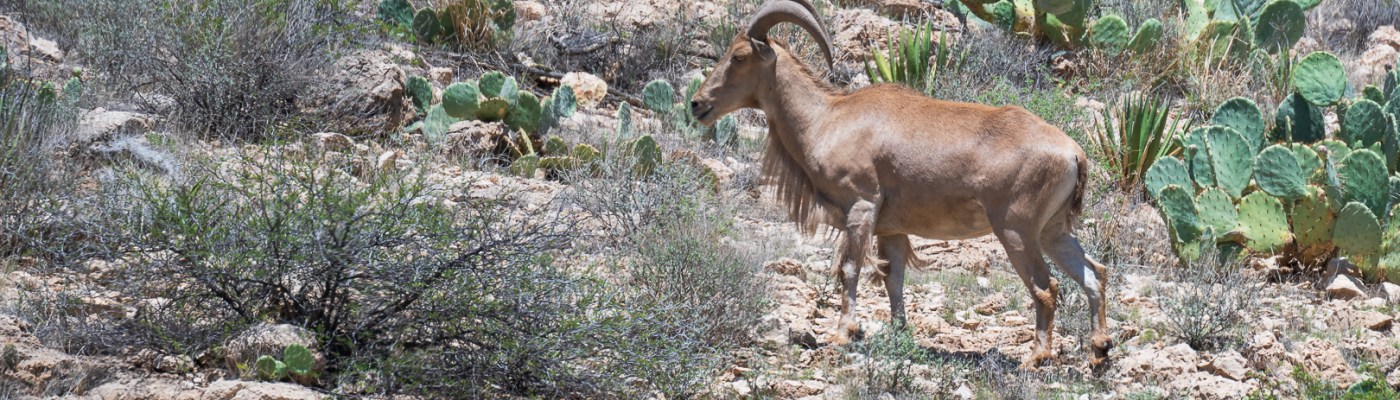
As we were leaving Carlsbad Caverns National Park, we saw some desert bighorn sheep from the park road. When I saw the bighorn sheep, I turned the car around and headed back up the road to a pull-out. I grabbed my camera and mounted the long-lens then headed back down the road so the bighorns would be on the driver’s side and shot these photos out of the car window. The bighorn were lazily grazing on the hillside and seemed to take no notice of me. Also, several other drivers passed me and didn’t even stop to look. Usually if there is wildlife near the road in a National Park, there are several cars parked along the road with people watching the animals.
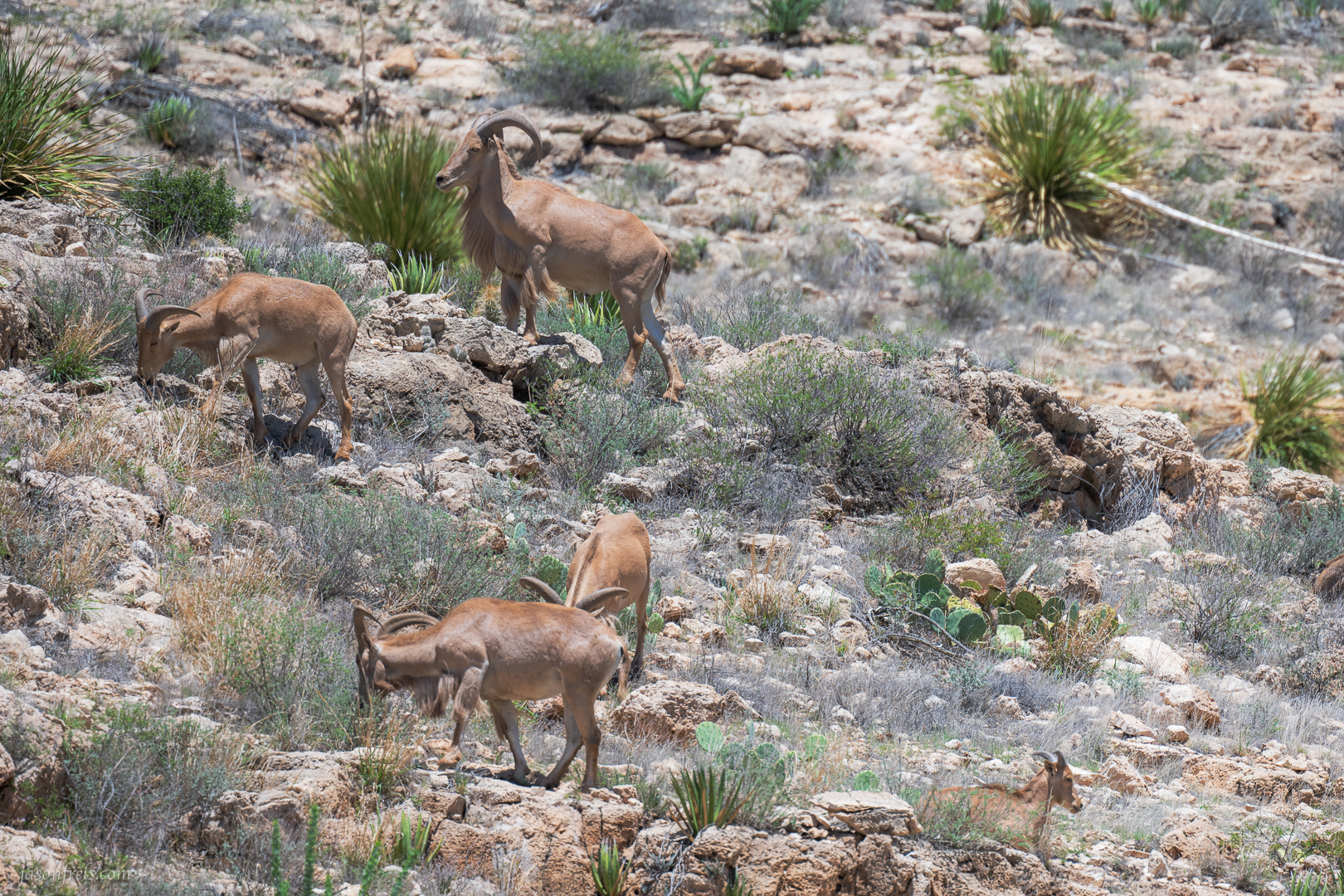
Desert bighorn are a variety of bighorn sheep that are adapted to the harsh desert conditions. They are closely related to bighorn sheep in other, less arid parts of the country, like the bighorn that I saw at Badlands National Park in South Dakota. Desert Bighorn can be found in the deserts across the southwestern US and northern Mexico from Texas to California. And being adapted to the desert conditions, they can go without water for days and can eat some of the desert plants. They are not endangered but have suffered a great deal of habitat loss in the last couple of centuries.
There were once large populations of desert bighorn in west Texas, but ranching and over-hunting reduced their numbers to a few hundred by the early 20th century. Texas outlawed hunting them and there is effort to protect their habitat and reintroduce them to Texas deserts in the Black Gap Wildlife Management Area along the Rio Grande near Big Bend National Park. And I have seen a few of them roaming around at Big Bend National Park, but not a herd this size. I think I counted 12 total Big Horn in this herd, which is about average according to what I have read.
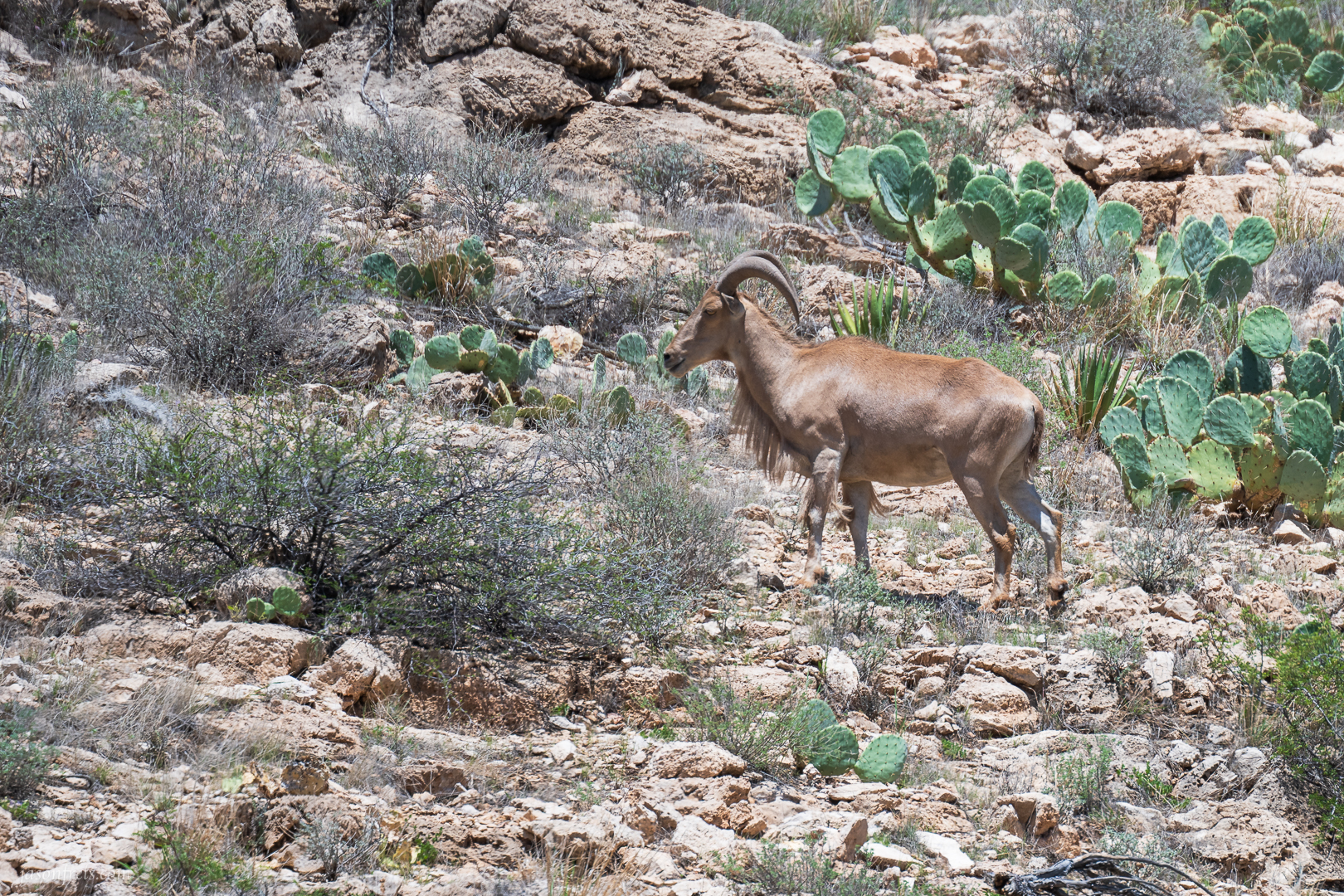
Both the males and female have horns, though the males generally have larger horns as they use them to head-butt each other when arguing about who is in charge. Their horns can also be used to tell their age as they continue to grow for their entire lives. Another thing their horns are good for is piercing cactuses to get something to eat. Desert Bighorn are also really good at nimbly negotiating the steep rocky hillsides and cliffs which gives them an advantage over their main predators: cougars and coyotes.
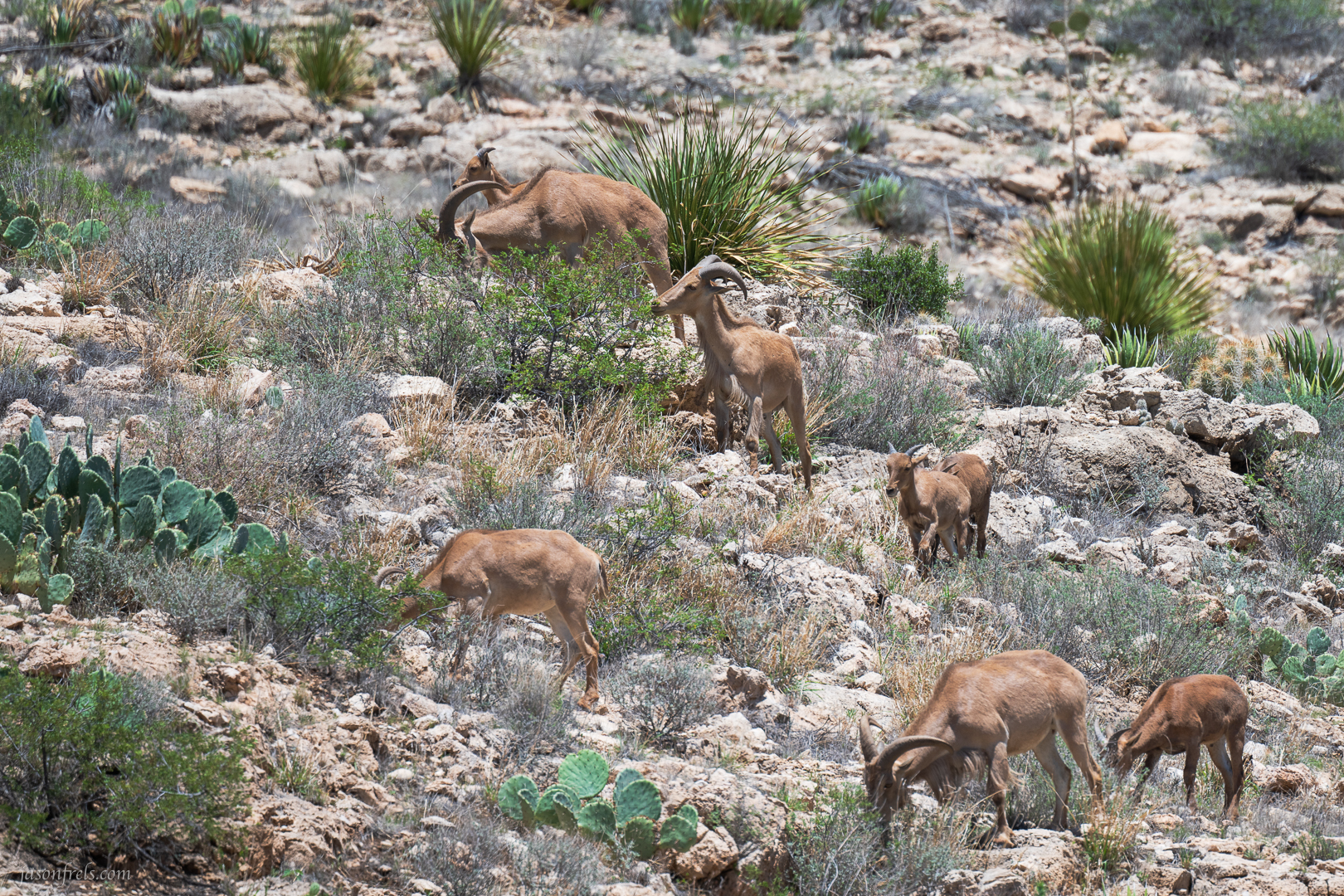
It was harsh, mid-day light but I did what I could in editing. One trick I learned in editing photos taken at midday is bringing down the mid-tones, which gives it more of a golden hour appearance. It helped a little, but it might have been better if I had thought to attach a polarizer. I also probably could have increased the shutter speed I was using as I had so much light to work with. My camera is set to a maximum shutter speed of 1/800 second for wildlife mode, but this might not be fast enough to handle the magnified motion at the 400mm focal length I was shooting.
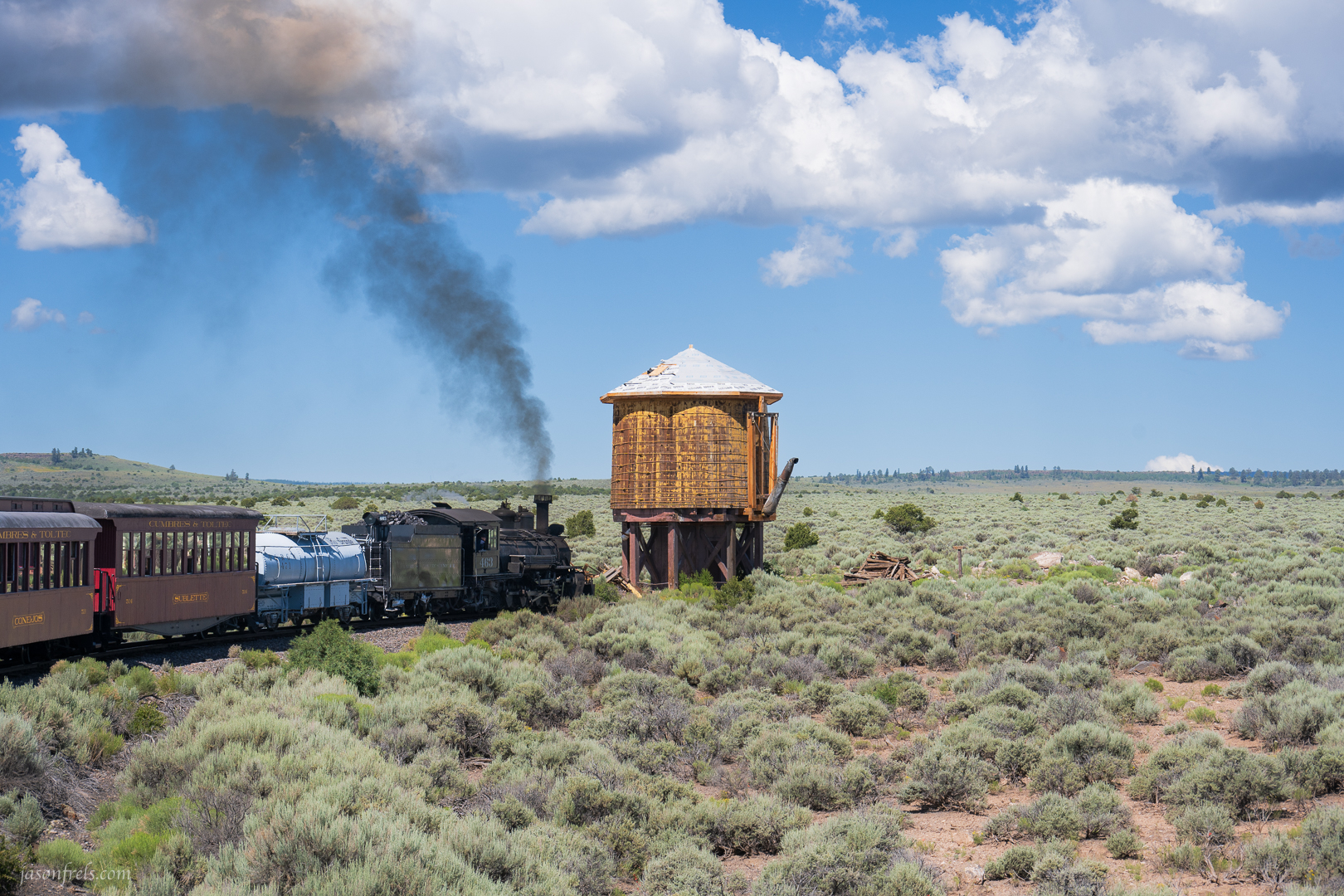
After all this, we headed to Santa Fe and I really didn’t do much shooting after that. I mainly just spent the rest of the trip having fun and driving. I did go on a fun steam train trip through the mountains, but aside from a chipmunk, I saw no wildlife. Thanks for reading.
 Jason Frels
Glad you didn’t find any “black sheep” lurking about. And sometimes trips are just as enjoyable for the trips themselves as opposed to taking deliberate pics with a focused purpose.and random images taken because of an interesting perspective or scene or just as interesting as those purposely taken. Carpe Diem!!!
LikeLiked by 1 person
Thanks. I was very focused on family enjoyment on this trip and some days I didn’t even take out my camera. I really enjoyed Santa Fe; it is a lovely little city.
LikeLiked by 1 person
Great shots, for pointing a camera out a car window. Bighorns are beautiful creatures, and they truly are big, compared with other animals in the desert. But they’re also a rare sight. I’ve seen them a few times while hiking in our desert, but it doesn’t happen often.
LikeLiked by 2 people
Thanks. It was lucky that they were on the hillside right as I was driving by. I have seen them in Big Bend, but only from a distance and they were too quick for me to get close enough for photos.
LikeLiked by 2 people
Beautiful pictures, but those are actually Barbary sheep, also known as auodad sheep
LikeLiked by 1 person
You’re probably right that I misidentified them.
LikeLike
Just think if you had never gone to the caverns you may have missed seeing the BigHorn Sheep. Wonderful that you were able to see so many. Love the photos of them and the steam train. I remember seeing them out West, many, many years ago. They aren’t as elusive as the shy armadillos.
LikeLiked by 1 person
One day you are going to see an armadillo in Pennsylvania and post about that.
LikeLiked by 1 person
😂Riiight! I would make you a bet on that but wouldn’t want to take your money. However, I promise if I ever see an armadillo in Pennsylvania, I will post about it, and you can say, “I told you so.”
LikeLiked by 1 person
Way to keep your eyes open for great shots! You scored ‘bigly.’
LikeLiked by 2 people
Great photos! Beautiful country.
LikeLiked by 1 person