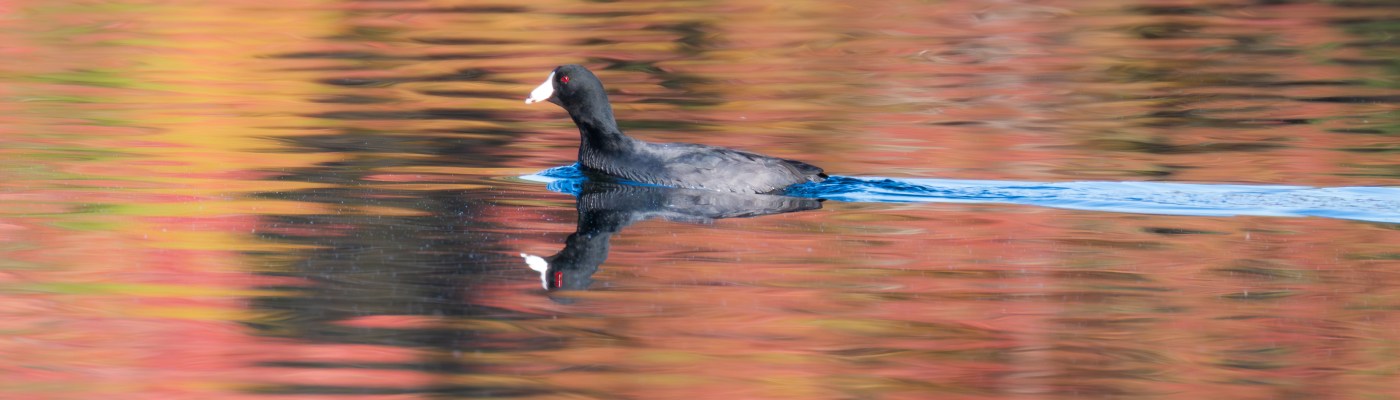
I got up early Saturday and went out to Inks Lake ostensibly to shoot wildlife. There is rocky place to pull over and park near the edge of the lake if you have a high enough clearance vehicle, and I figured I would go there and shoot birds until the park opened a little later. I have seen a lot of birds in this part of the lake before and I figured that at sunrise they would hang out here. But aside from a few coots, the lake was free of birds on this morning.
It turned out that I didn’t mind this so much as I hadn’t realized how the trees would look in the early morning sun with their fall foliage. The wind was very calm and the lake was almost still making for a magnificent reflection. So, I set up the tripod and started working on this instead.
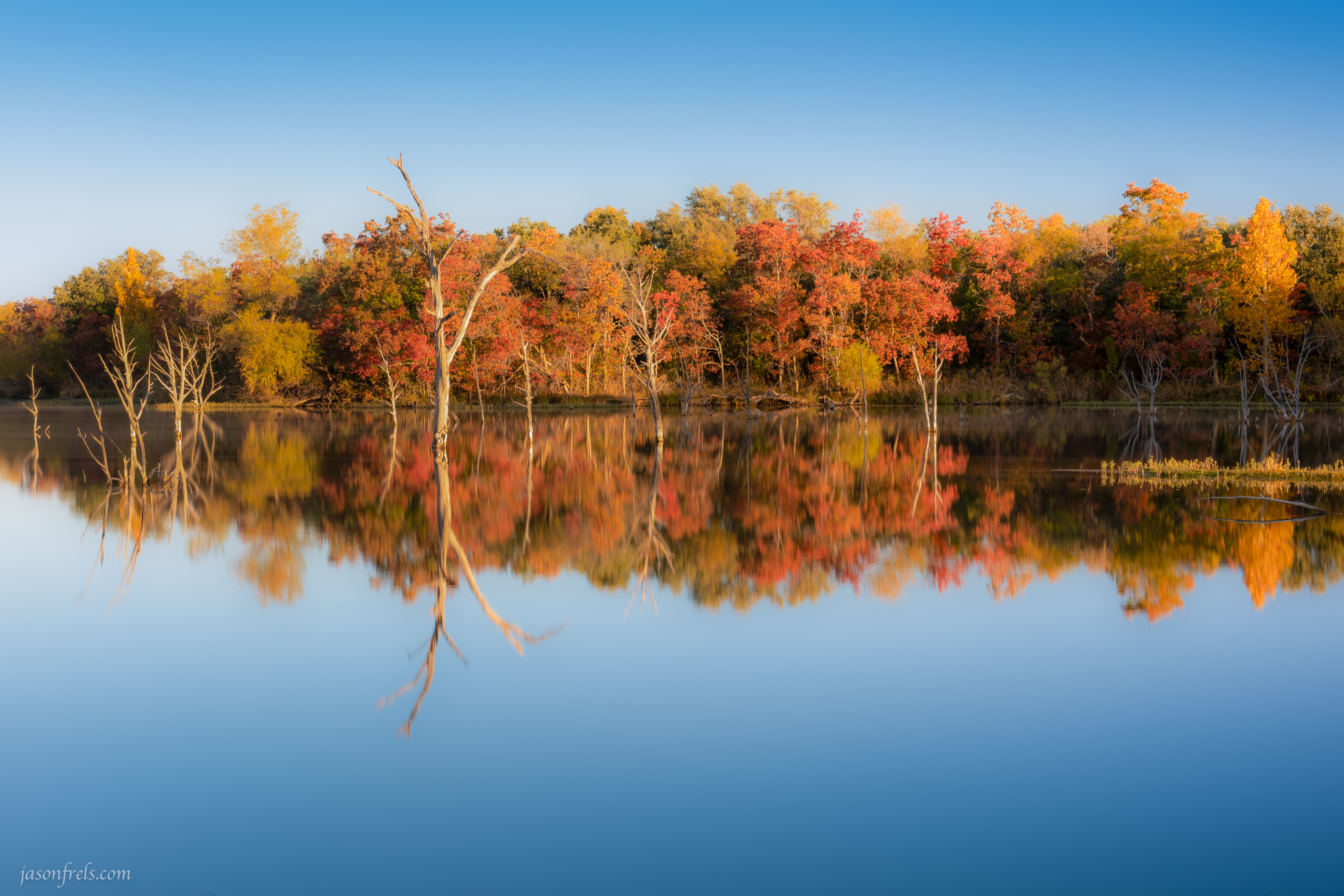
The problem I had was that I only have an ND filter for my ultra wide lens as I damaged my other filter. So, I couldn’t get really good reflections at about 50mm focal length where I wanted to be. I ended up setting the camera to take 32 successive shots to average later. At a quarter second each, that should give me the equivalent of 8 seconds. The photo above is 30 of those photos averaged together to give me a long exposure. The process is to open the images as layers in Photoshop, convert all layers to a smart object (a couple of seconds), stack them using the mean function (30 seconds), and flatten the image (a couple of seconds). The result is OK, but not as good as using an ND filter and getting a true long exposure.
The image below was shot using a wider lens and an ND filter, so you can judge the difference for yourself. I like the framing of the top photo, but the reflection in the bottom photo is very mirror-like. The wind may have been calmer for the second shot.

As I said, there were some American Coots swimming around and I eventually got around to shooting them. I tried to get some good photos of the coots swimming within the colorful reflections and eventually they obliged. I really love the color on the water.
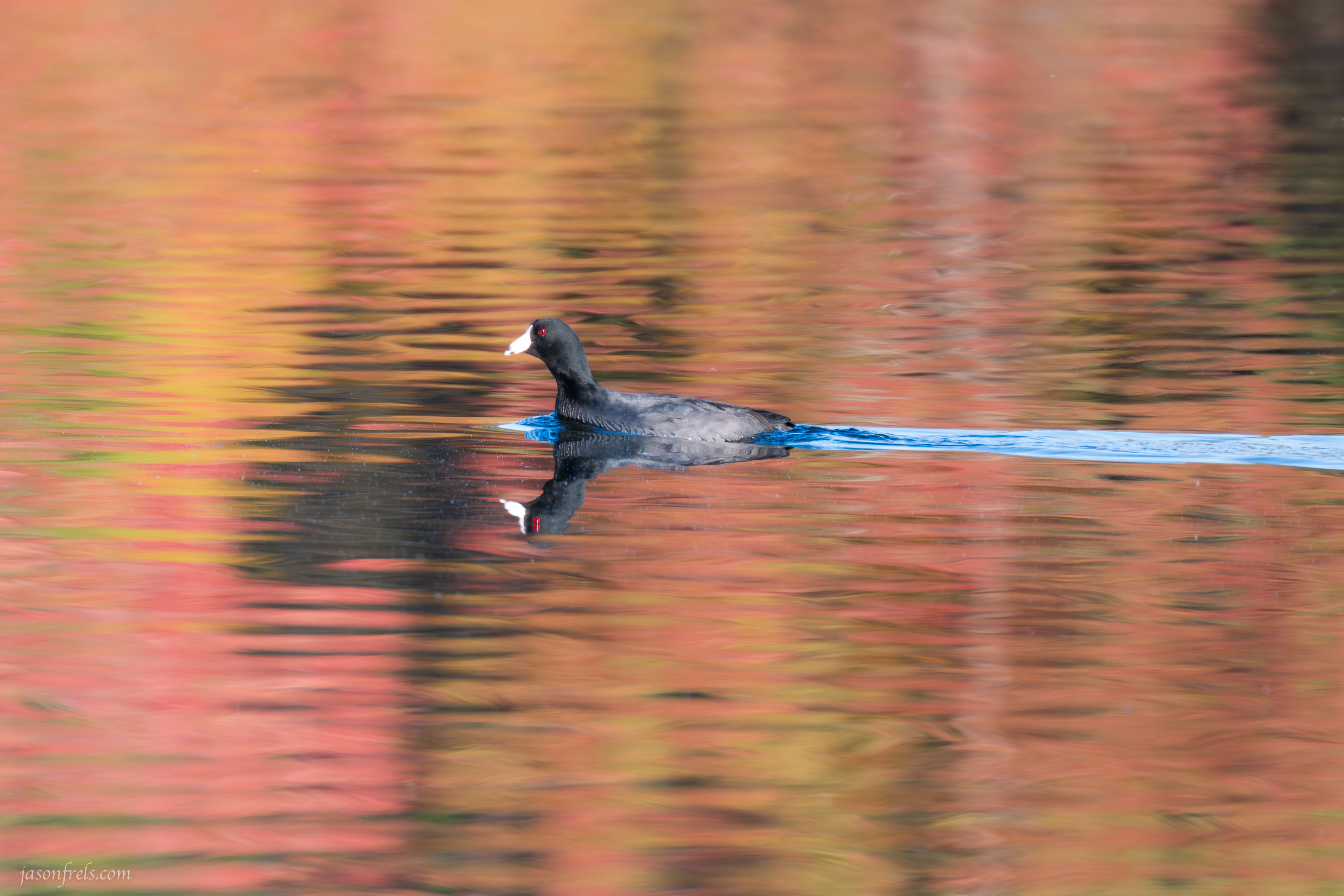
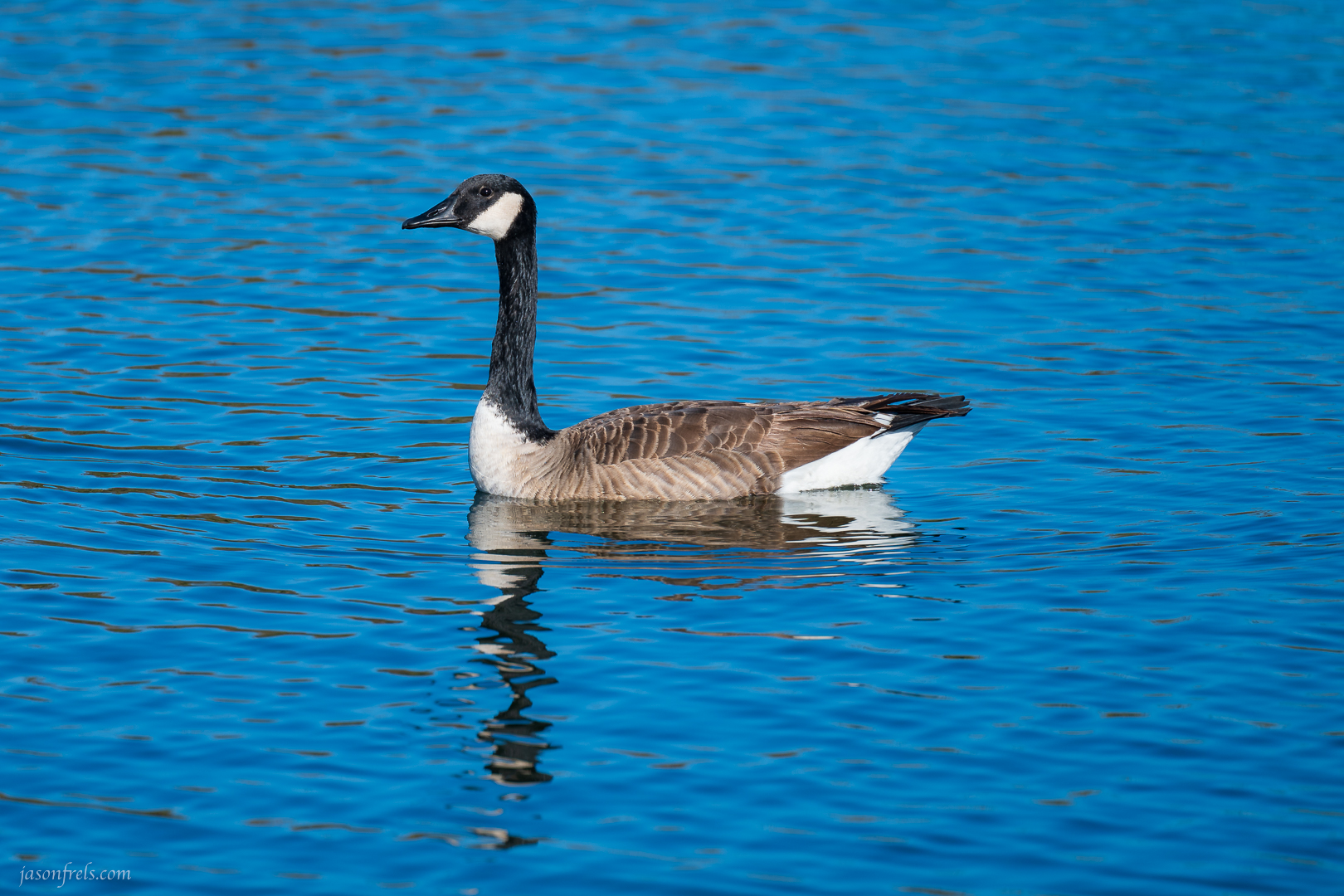
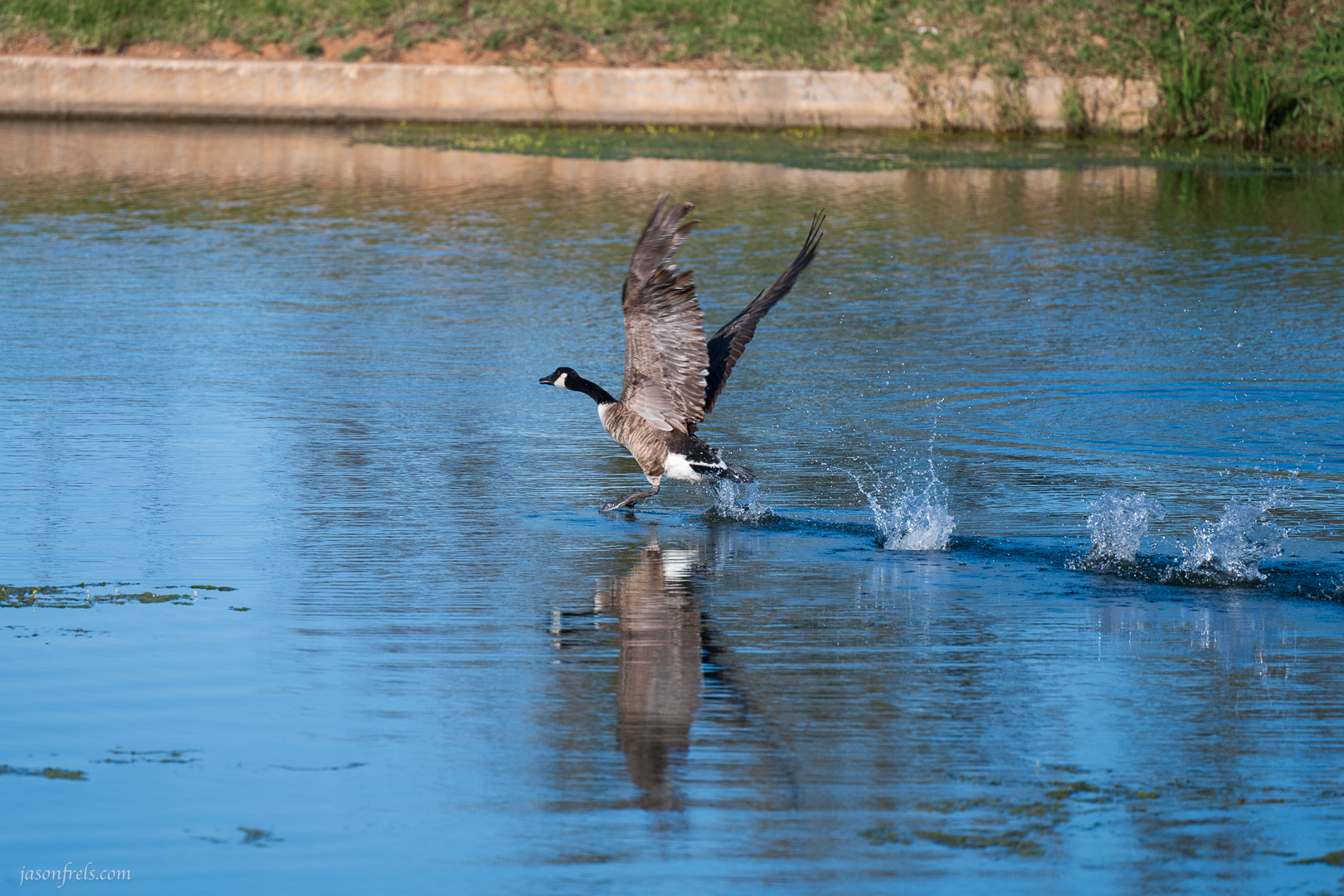
I shot the coot using a 2x teleconverter with a 100-400mm lens. This gives me a long reach of 800mm, but you pay for that with reduced aperture and degraded sharpness. Using the teleconverter, the widest aperture I can get is f/11, which doesn’t provide a lot of light. To compensate for the reduced light, the ISO goes up which increases noise and further reduces sharpness. The above image was shot at ISO2000 and later sharpened and noise corrected in Lightroom. Compare that to the tack-sharp Canada Goose photo below that was shot without the teleconverter and at ISO140.
After shooting at the lake, I went to check out the park bird blind and found very few birds there. A lady came to clean the area and told me to go check out the National Fish Hatchery down the road from the park. It is open to the public and all the ponds attract a lot of birds. So, off I went to the fish hatchery and sure enough there were a lot of birds there.
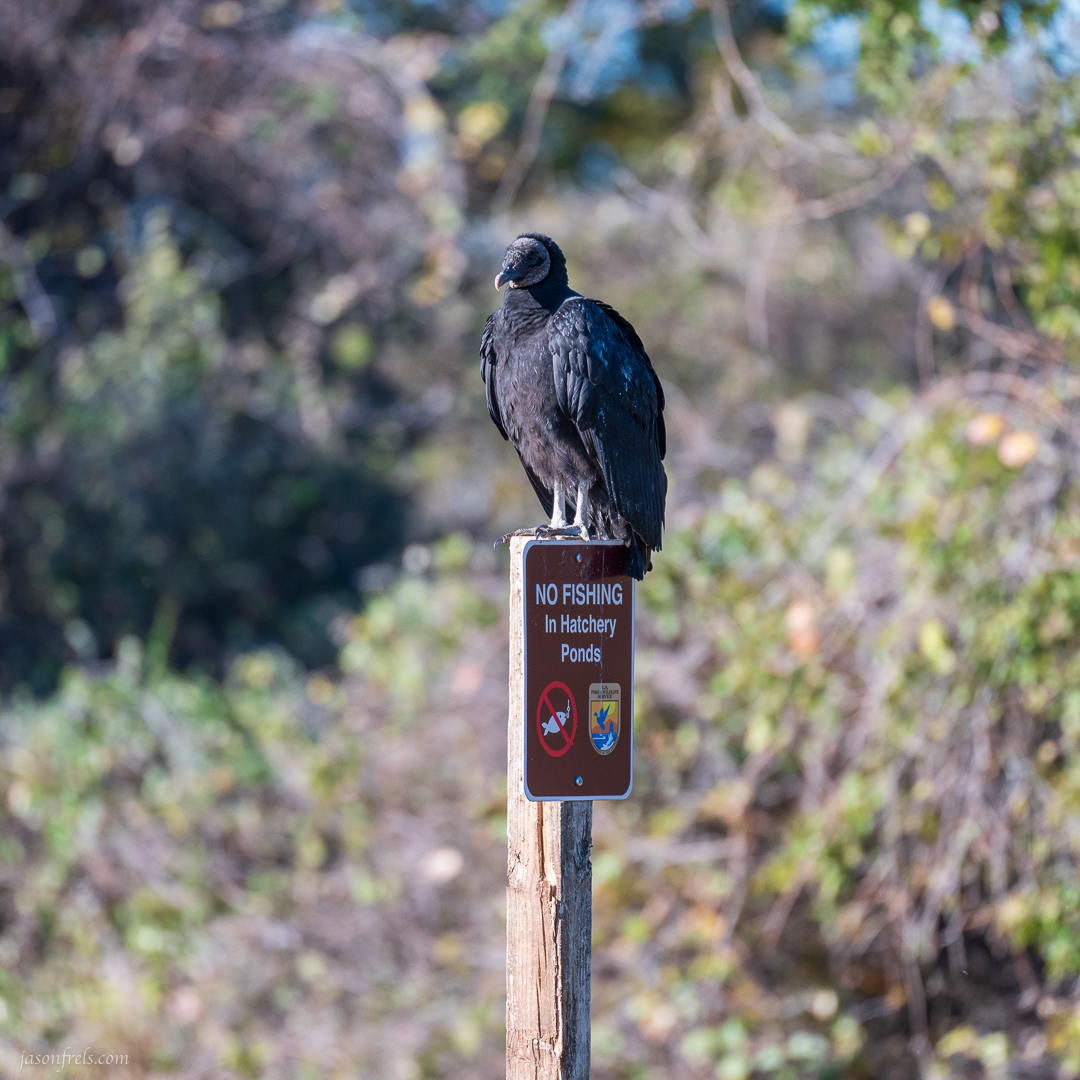
What I mainly saw were black vultures and Canada Geese like the one in the photo above. I am glad I know about the fish hatchery now. It is just down stream from the lake and there is no entrance fee. I may return here on another morning and wander around the ponds shooting birds. Thanks for reading.
 Jason Frels
I like the wider lensed “mirror” shot better. But all the fall foliage photos were fantastic. Great shot of the vulture. I’ve found that roosting vultures can be very skittish, and difficult to get a shot off before they fly away. I also really like the coot in the golden water.
LikeLiked by 3 people
That vulture was not bothered by me at all. I walked right past it and it just kind of stared at me, perhaps expectant of some misfortune happening for me.
LikeLiked by 2 people
Hmm, sounds ominous. It’s always a bad sign when a vulture isn’t afraid of you.
LikeLiked by 1 person
When Jason first mentioned about there being a few coots by the lake, I thought maybe he was talking about you and him, crazy old coots, being there. 😄
LikeLiked by 3 people
Pffft! Spoken by someone who probably has cooties.
LikeLiked by 2 people
You may want to duck! Jason says I am mean today, so something may come flying out of my hand. Just saying …..
LikeLiked by 1 person
You are mean just today? But I’m not worried, today I’m wearing my football helmet.
LikeLiked by 2 people
“No comment”, smartie!
LikeLiked by 1 person
I also saw some old nags out there.
LikeLiked by 2 people
Oooh…..! You are just making an innocent comment, right, not insinuating anything? I may or may not have anything in my hand. LOL!
LikeLiked by 1 person
You know how us old coots can be.
LikeLiked by 1 person
Haha! I have a feeling that phrase may come back to haunt me. 🤦♀️
LikeLiked by 1 person
Amazing photos! I can’t pick a favorite. Love the reflections of the fall foilage in the water and the colors of the coot in the water. Plus the beautiful blue water with the Canadian goose. You made me wish I was by the lake now. .
LikeLiked by 2 people
Lovely reflections. The water looks like glass.
LikeLiked by 2 people