Winter is a great time to see birds on the Texas coast. There are many birds that spend the winter in the mild coastal weather as well as the many birds that live there year round. I have a desire to up my wildlife photography game and I recently bought a Nikon Z6III, which has a lot of wildlife and action-focused features. With this in mind I spent a long weekend on the coast near the Aransas National Wildlife Refuge trying to photograph birds. One bird that I was particularly interested in is the Whooping Crane which is an endangered bird. The last remaining wild flock of Whooping Cranes winters only on the Texas Coast around the Aransas NWR. But there were many other birds and that’s what this and the next blog post will be about.
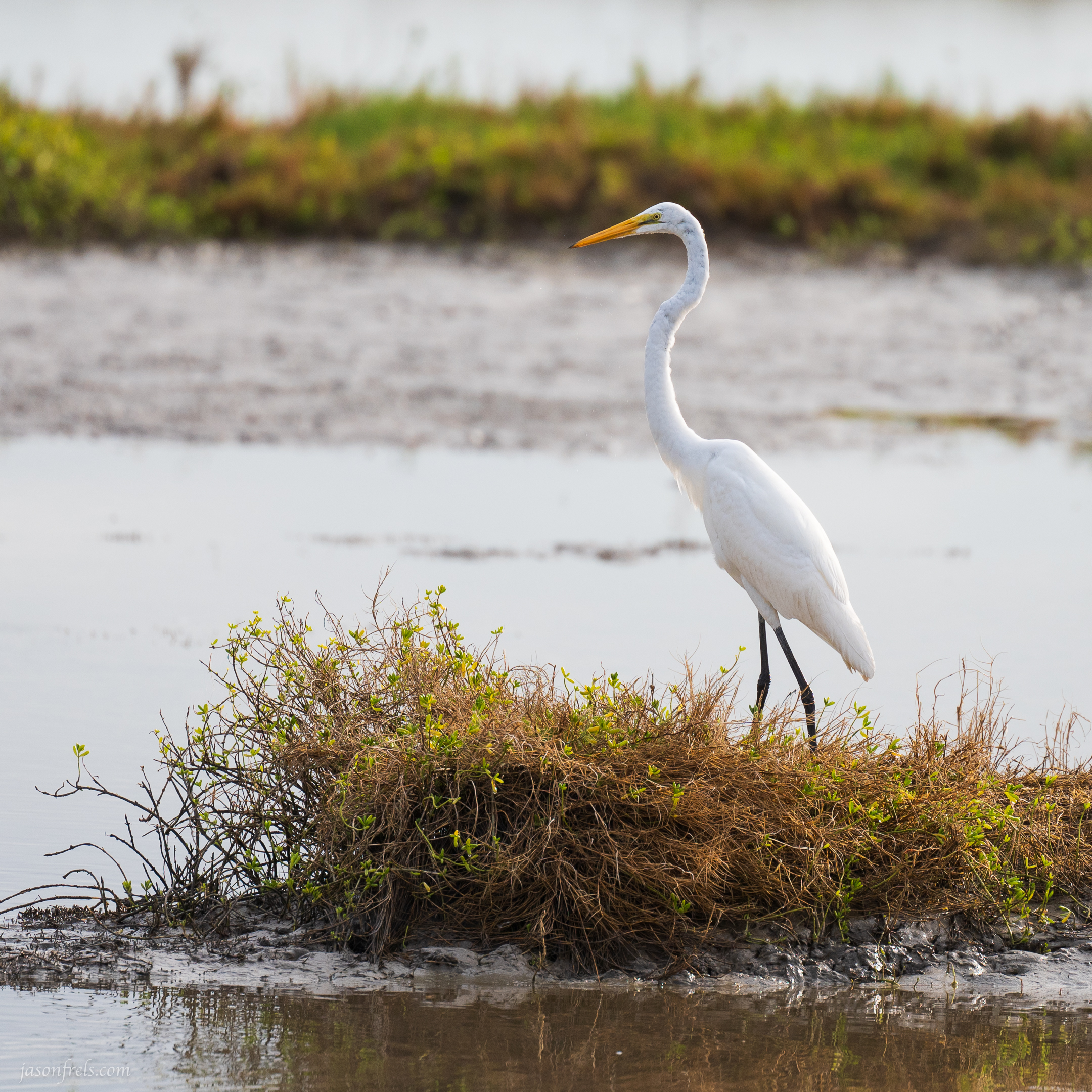
The Great Egret, not to be confused with the Snowy Egret, is very common in the wildlife refuge. In fact they can be found all over the Americas. I saw dozens of them at the wildlife refuge and often see them near where I live. They are a cousin of the heron and their bright white plumage makes them easy to spot. It can also make them a bit difficult to photograph as they over-expose easily. I photographed the great egret show below while walking on the Heron Flats trail. It didn’t seem to be very worried about me standing there pointing a camera at it.
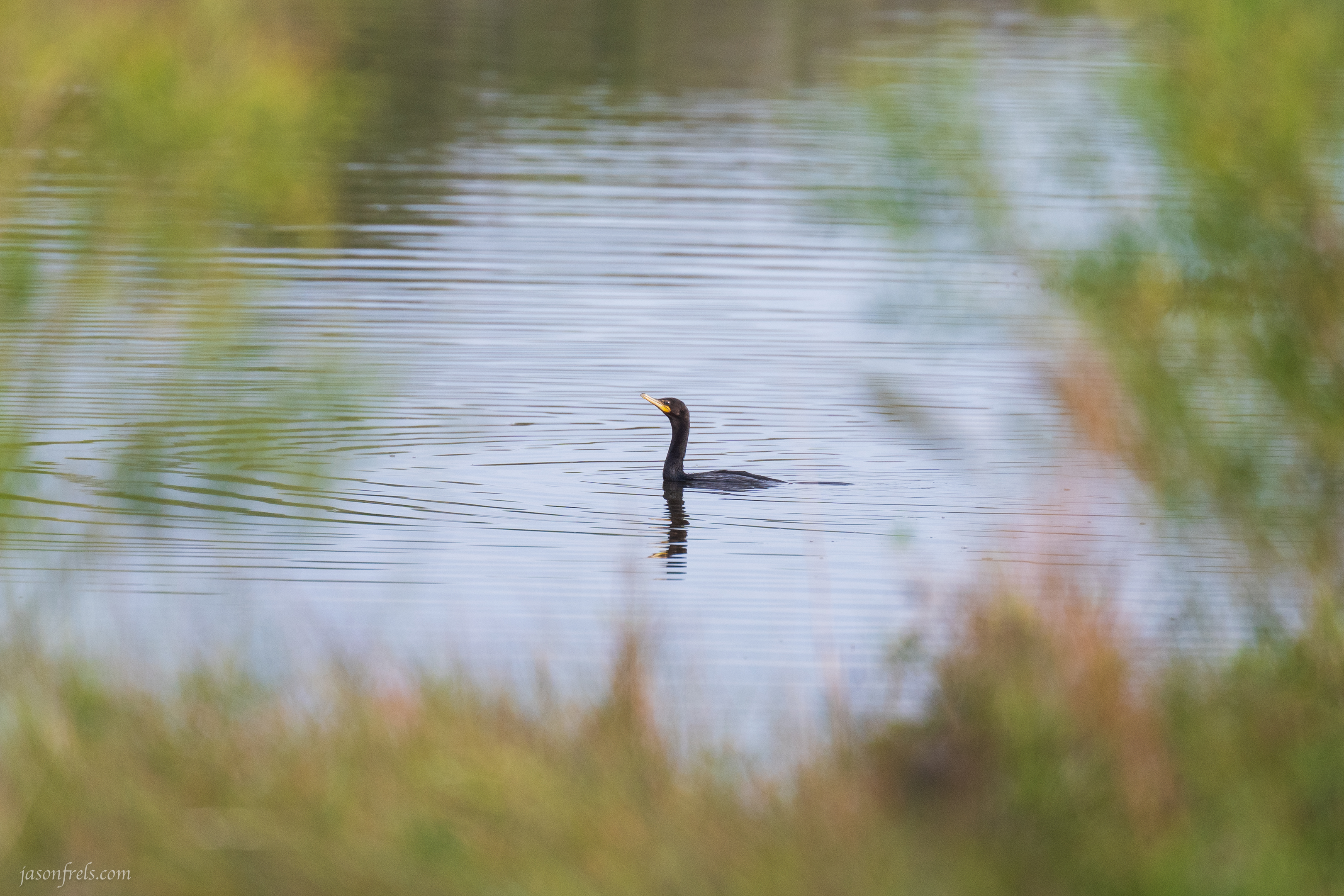
A cormorant, a Neotropic Cormorant I think, was swimming in a pond not far from an alligator. It may be a Double-crested Cormorant which are common as well, I am just not absolutely certain. Neotropic Cormorants live from Texas down to the southern end of South America. They have a rather distinctive hooked beak and I have often seen them drying their wings in the sun. He didn’t stick around long enough for me to question him and flew away soon after he saw me.
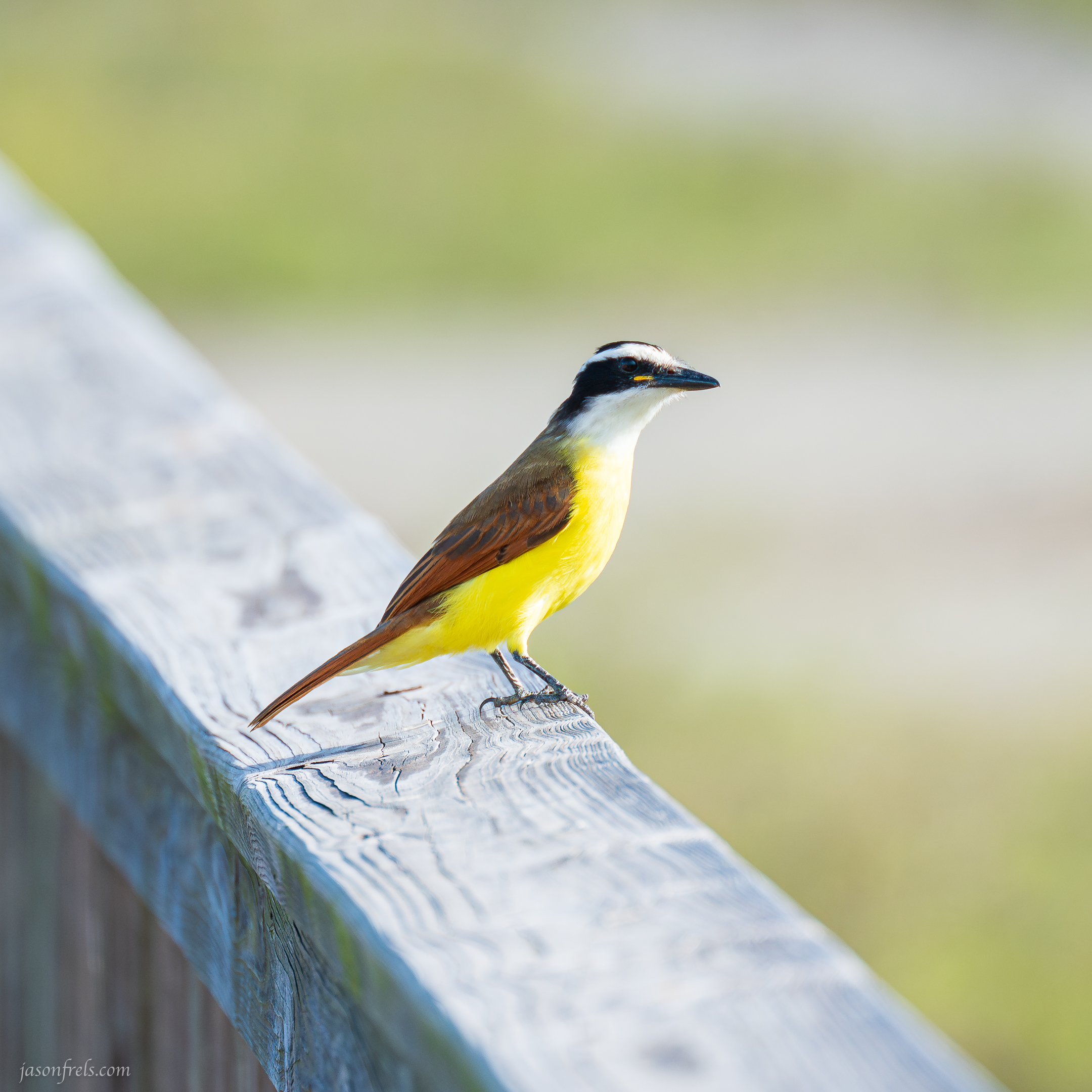
I saw a flock of Great Kiskadees hanging about in a tree near the main observation tower. It is a pretty, colorful bird that mainly lives in Central and South America. The gulf coast of Texas is at the extreme northern end of its range. I guess I was lucky to see them. They are bug eaters, which makes me happy as I was under constant attack by mosquitoes during my time in the wildlife refuge. The birds seemed content to hang out on the boardwalk rail while I photographed them.
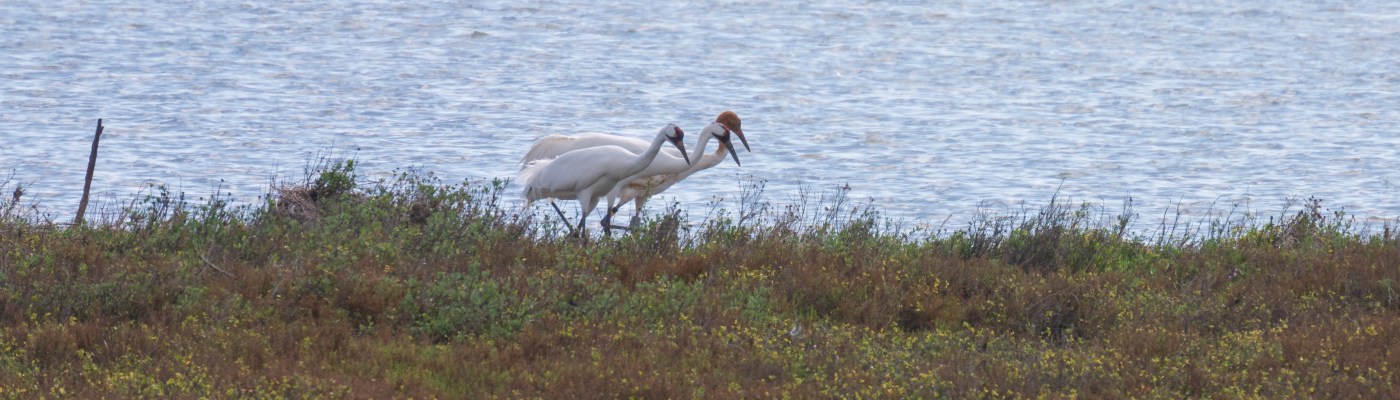
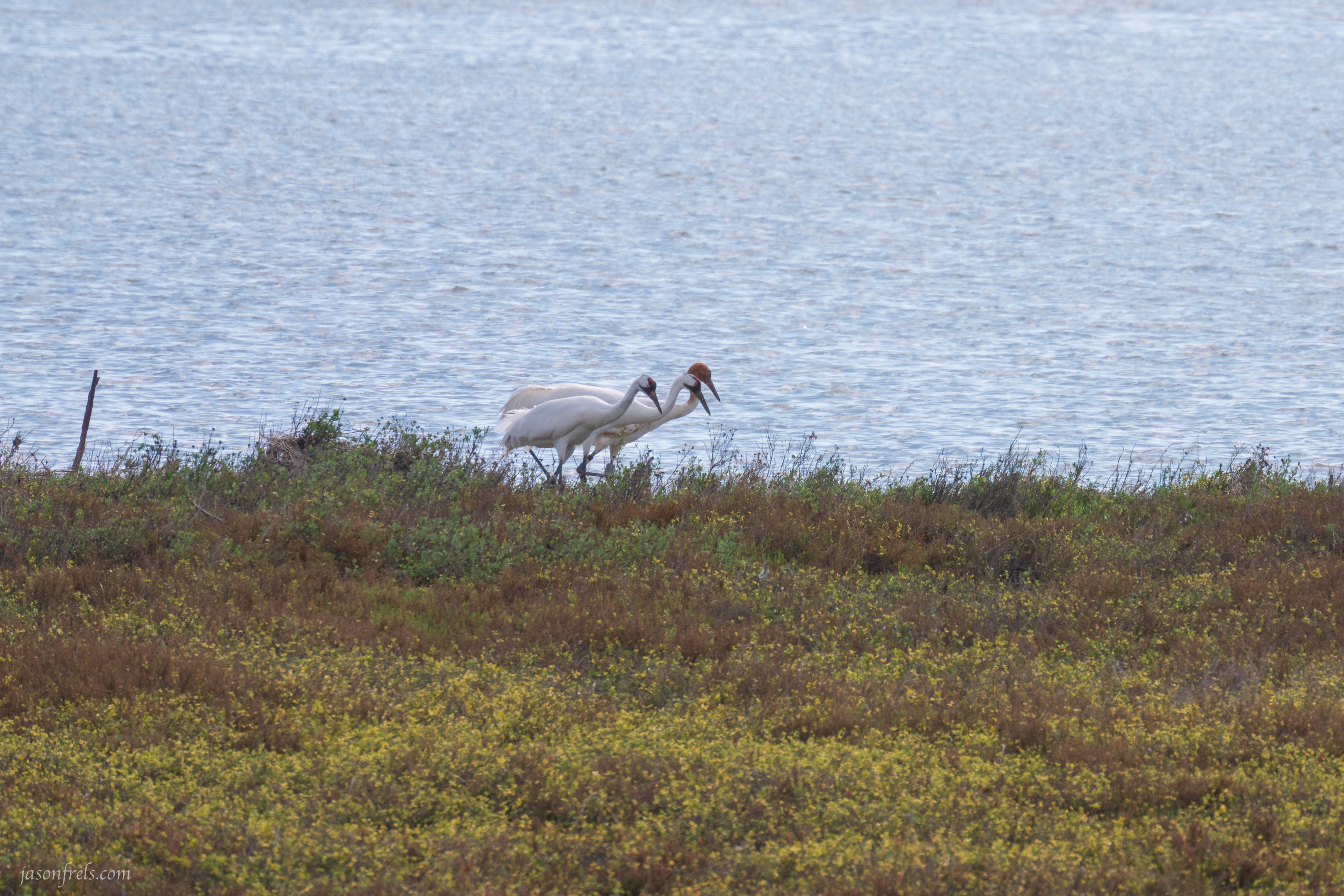
I did see some Whooping Cranes, but only from a distance. They don’t typically get very close to people, perhaps because we have just about driven them extinct. By the 1940s it was believed that there were only 20 or so Whooping Cranes in existence. Today, thanks in large part to the Aransas National Wildlife Refuge in the US that protects their wintering grounds and the Wood Buffalo National Park in Canada which protects their summer breeding ground, there are about 600 Whooping Cranes living today, though many are in captivity. The only natural wild population winters around the Aransas National Wildlife Refuge and I happened to see three of them from the observation tower. The photo below shows a couple of parents and their young-one walking along the shore looking for crabs I suppose. I had to shoot this from a great distance with a teleconverter so it isn’t the sharpest image you’ll see of these birds, but I was very excited to see them. They also hang out just outside of the refuge near Goose Island State Park. More on that next time.
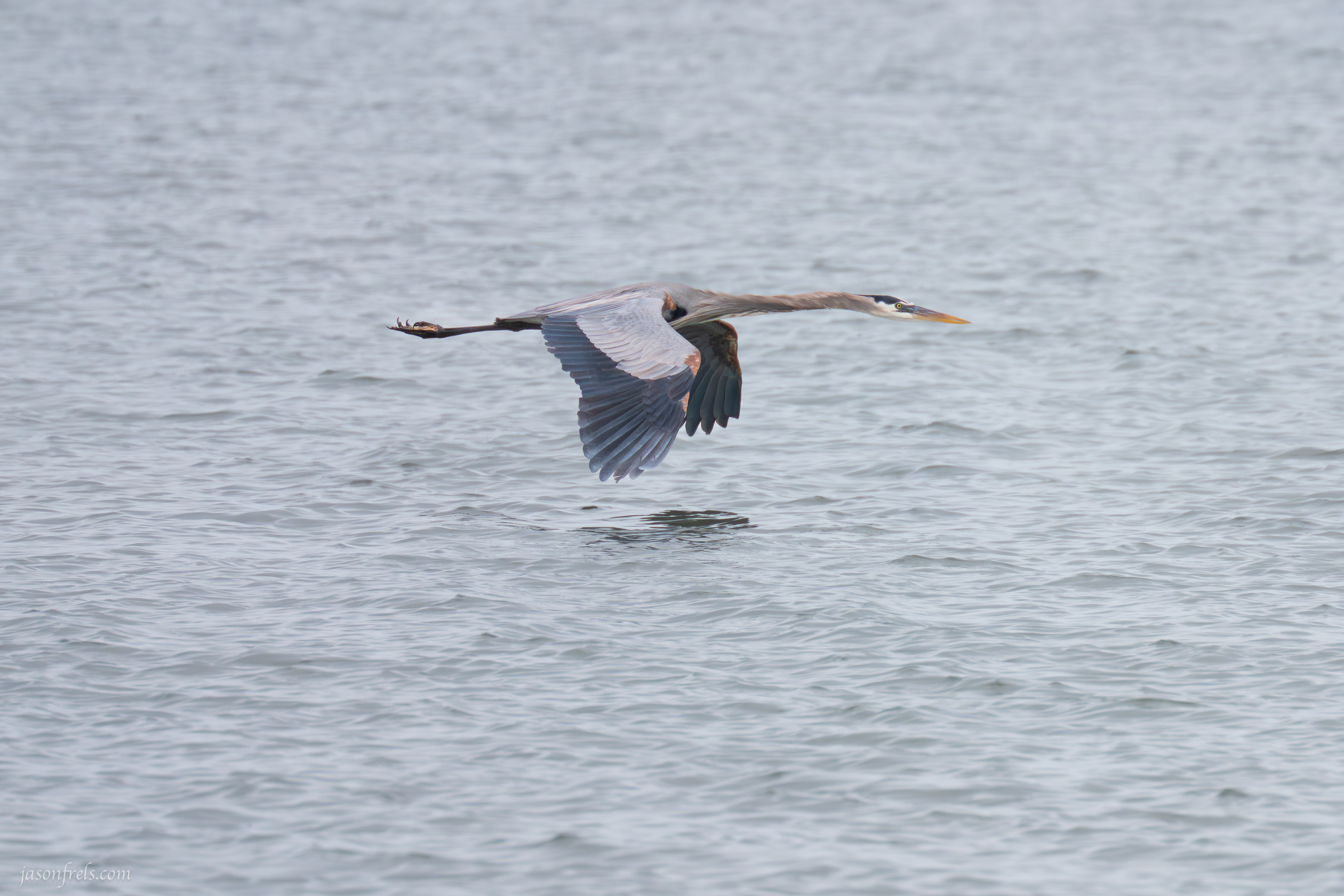
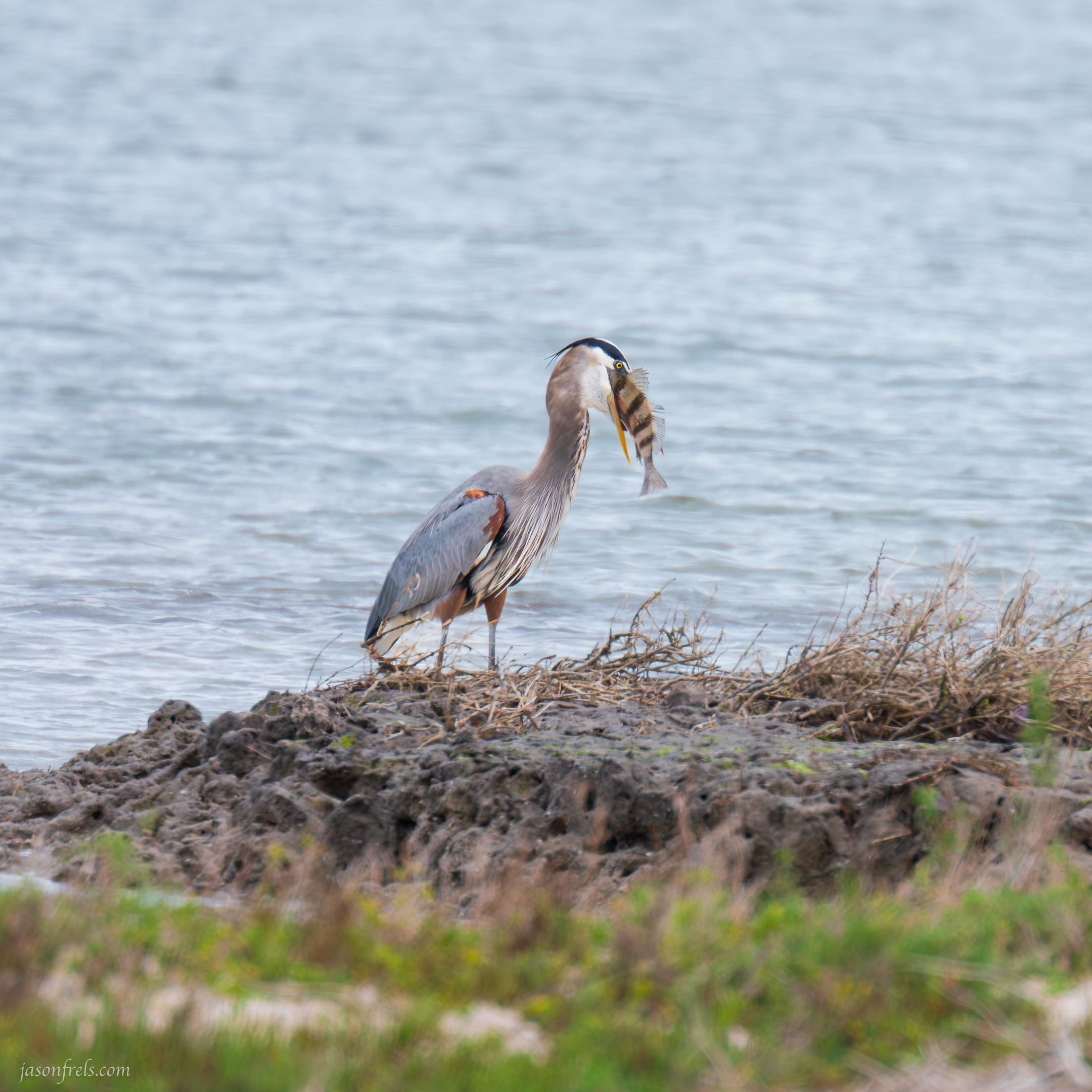
One of the most common large birds in the refuge, as well as much of North America is the Great Blue Heron. I saw dozens of these birds wading in the marsh and along the shoreline of the bay looking for fish. I am always amazed at how big of a fish they can swallow whole. I was actually ready to pack it in and head back to the truck when I saw that one had caught a fish so I watched and photographed the action. In the photo below, the heron caught a black drum fish (I think), carried it over to the shore, speared it few times with its beak to finish it off, then rinsed it off in the water and swallowed it whole.
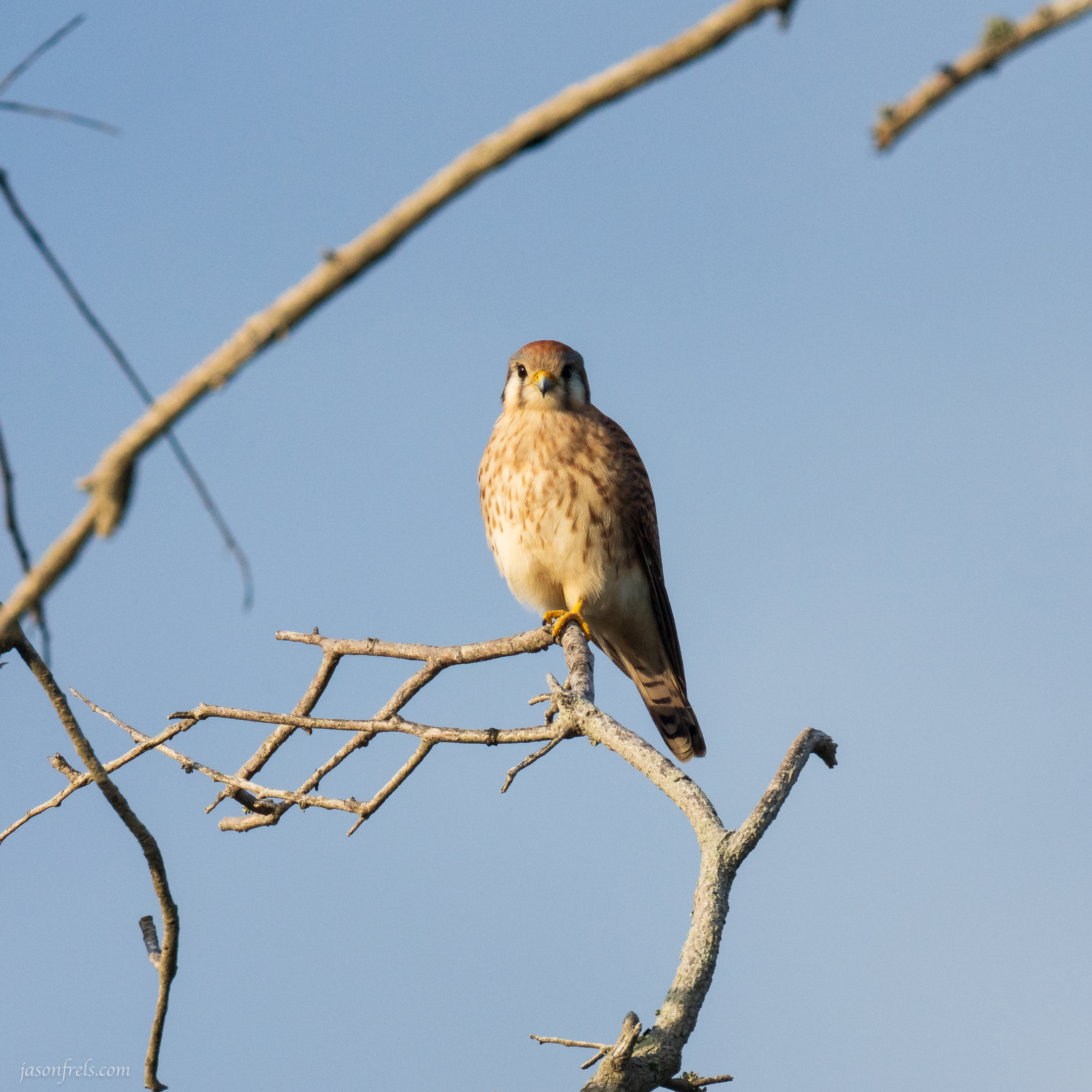
I finished off the day seeing an American Kestrel in a tree catching the last light of the day. These smallest members of the falcon family are common birds across the Americas but it may be the first time I have ever photographed one. Another long shot as she was perched in the top of a dead tree, but I did get an enjoyable photo. A very pretty bird who seemed to be just as interested in me.
I saw dozens of difference species of birds on this weekend, more than I was quick enough to photograph, and these were some of my highlights. I also saw a lot deer and a couple alligators. I will say that the animal detect autofocus on the Z6III was generally good at identifying the birds and even focusing on their nearest eye. And this wildlife refuge is a terrific place for birders this time of year and mosquitoers too if that’s a thing. Thanks for reading and I hope you come back for part 2.
 Jason Frels
Beautiful. I really like the shot of the heron eating the fish. Looks like you’ve found a good camera for wildlife photos. Next time, I’m itching to see a close-up of a mosquito.
LikeLiked by 6 people
When I see the herons eating fish that large, I think about swallowing something that large in relation to me. It would be like swallowing a chihuahua or something. Though I’d remove the flea collar first.
Mosquito close-ups suck.
LikeLiked by 2 people
I’m rather partial to Mexican food, so I think I could handle swallowing a chihuahua. And who knows, maybe I’ve already done it.
LikeLiked by 2 people
There definitely some sort of mystery meat in that chorizo.
LikeLiked by 2 people
Yes, and it might explain why people yap on and on about it.
LikeLiked by 3 people
I certainly wolf that stuff down
LikeLiked by 3 people
I like to buy it by the pack.
LikeLiked by 3 people
You’d like the food my grandmother used to make. She was from the old country and made a good German shepherd’s pie.
LikeLiked by 4 people
Sounds good. My neighbor’s dog makes the same stuff, and with all-natural ingredients.
LikeLiked by 3 people
Seems like we are getting to the tail end of all these puns.
LikeLiked by 3 people
Yeah, I don’t think I can scoop anymore up.
LikeLiked by 1 person
What a relief! 🙂
LikeLiked by 2 people
I was going to put a paws in them if you weren’t done!
LikeLiked by 1 person
🤦♀️! Don’t ruin Shepherds pie for me, doolally!
LikeLiked by 3 people
It goes well with some grilled collie-flower.
LikeLiked by 2 people
Oooh. … I am trying hard not to let something fly out of my hand, PUN-derhead!
LikeLiked by 2 people
Ohhhhh nooooo
LikeLike
Sorry. I understand it tastes best when steaming hot.
LikeLiked by 2 people
Yes, its no good cold. Though you don’t want to burn your tongue either
LikeLiked by 2 people
Which is why sometimes it’s best to follow your dog around in the yard, with a plastic bag in hand.
LikeLiked by 2 people
TH…! You are lucky. 😛
LikeLiked by 2 people
Thank you, Santa!
LikeLiked by 2 people
Just remember Santa 🎅 goes on vacation after Christmas!
LikeLiked by 2 people
That’s after he brings me a double-steel plated helmet.
LikeLiked by 2 people
LOL!
LikeLiked by 2 people
😶✋️!!
LikeLiked by 1 person
You’re all going to get hounded over these comments!
LikeLiked by 2 people
I know. People are howling about them already.
LikeLiked by 2 people
🤭🤭🤣
LikeLiked by 1 person
🤢
LikeLiked by 2 people
Don’t knock it ’til you’ve tried it.
LikeLiked by 2 people
No thanks, I will pass, no matter how “tempting” it sounds.
LikeLiked by 2 people
Oh gosh! 🤦♀️
LikeLiked by 1 person
Nice collection of birds, Jason. Am a bit jealous. Have yet to see a kestrel although I believe they are around this area. I saw this conservation photographer talk a couple of months ago and his book is really nice. He does some amazing work and followed the birds along its entire migration route. https://www.michaelforsberg.com/merchandise/intowhooperland
LikeLiked by 1 person
I had to look up the Kestrel after I took it to learn what it was. I didn’t recognize it when I saw it but it seemed like some sort of bird of prey and it had pretty feathers too.
LikeLike
Wonderful photos of all the birds and liked learning more about them. Didn’t know the whooping cranes were so scarce back in the 1940’s. Glad they are protected now. Wish we had Kiskadee birds near us. The egrets always look so elegant. I am looking forward to Part 2.
Glad you endured the mosquito bites in order to get the photos. At least you didn’t get bit by an alligator.
LikeLiked by 3 people
I was wearing alligator repellent
LikeLiked by 2 people
How wise of you. 😂
LikeLiked by 1 person
Jason, these are outstanding! I love birding. I miss my “good” camera. The Texas birds are really showing off for you! The yellow bird~ just wow! If I scroll back to catch the names, I’ll have to rewrite~ lol. They’re all wonderful!
LikeLiked by 1 person
Stunning pics of nature showing off. Well done.
LikeLike
[…] species of birds, I decided to break it into two blog posts to cover the highlights. In the previous post, I covered several birds that I saw at the refuge, but I also saw many around the town of Lamar and […]
LikeLike