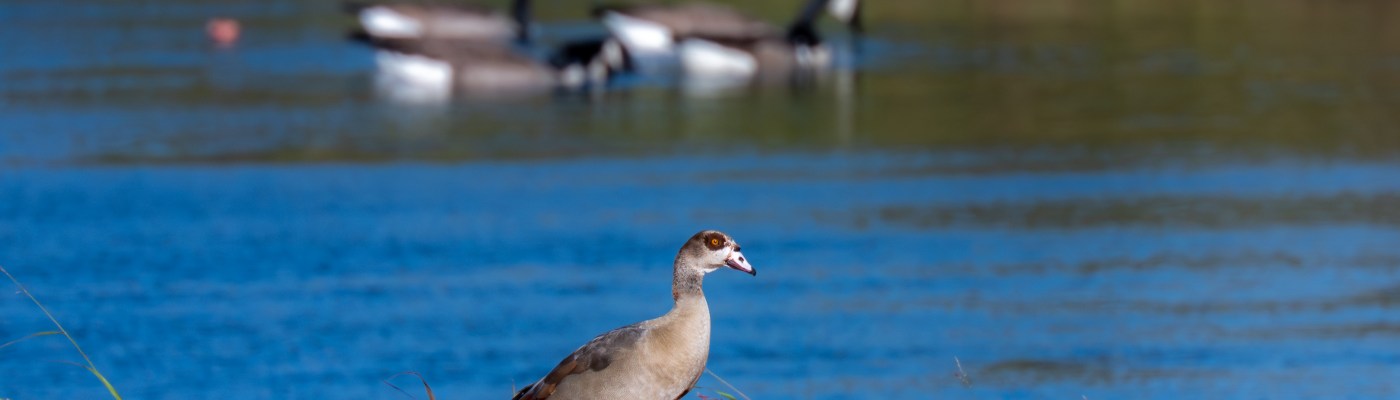
I went to the fish hatchery Sunday morning to practice wildlife photography. The Inks Dam National Fish Hatchery is run by the US Fish and Wildlife Service and is open to the public. I was worried that it might be closed due to the current situation of extreme incompetence of our Congress, but the gates were open so I drove in. You can usually find plenty of birds out there and it was a mostly clear morning, so I liked my chances. I found lots of birds and got decent photos of six different kinds of bird.
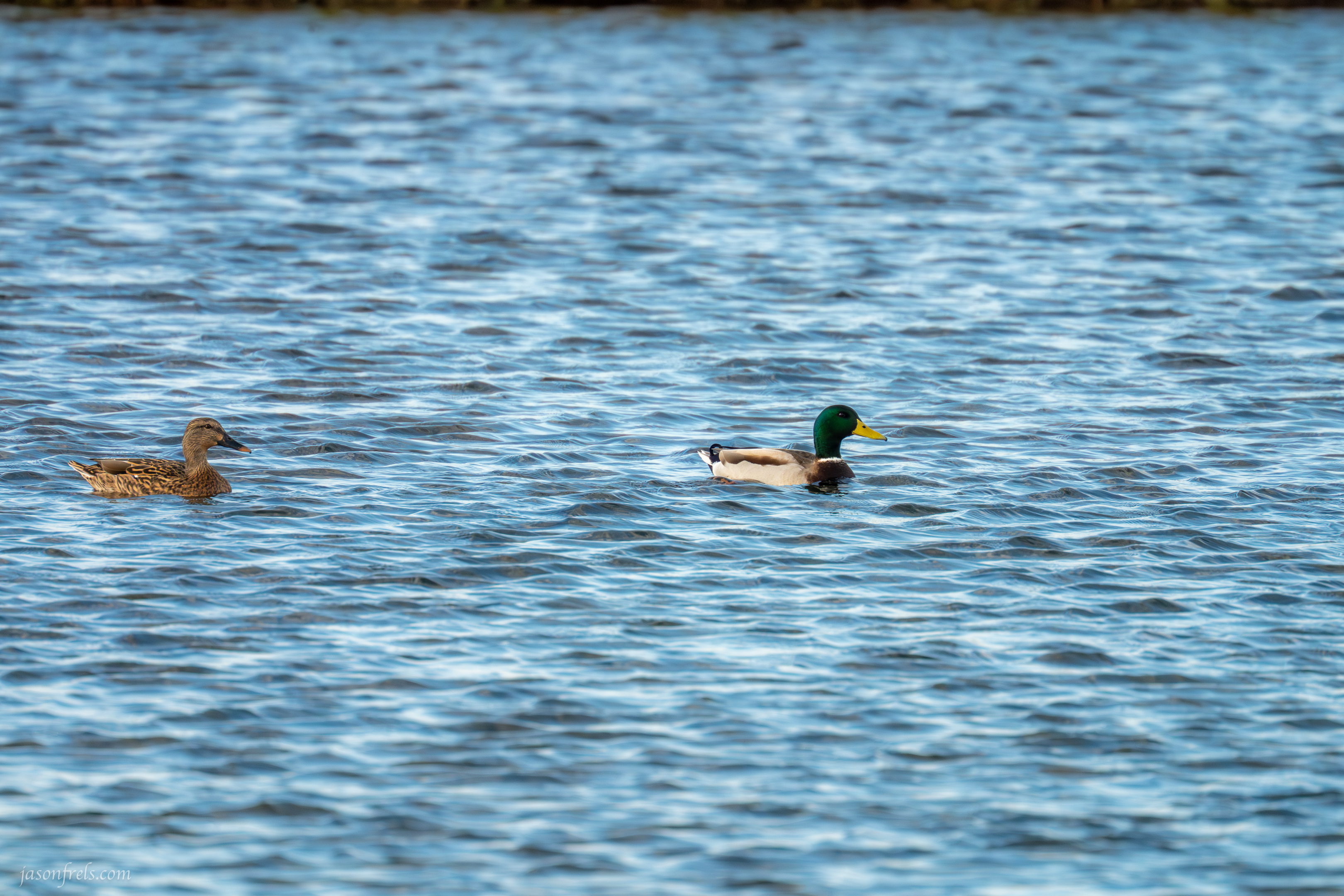
Mallards. Mallards are common across North America and show up in Texas this time of year. I guess they think that you’d have to be crazy as a loon to stay in Canada over the winter, so they head south for the milder Texas weather. I only saw two mallards, but I think there was another flock of them that flew away while I was wandering around. The males have green heads to contrast with their yellow beaks while the females have mostly mottled brown feathers. These two seemed to be a couple, or maybe a pair-a-ducks.
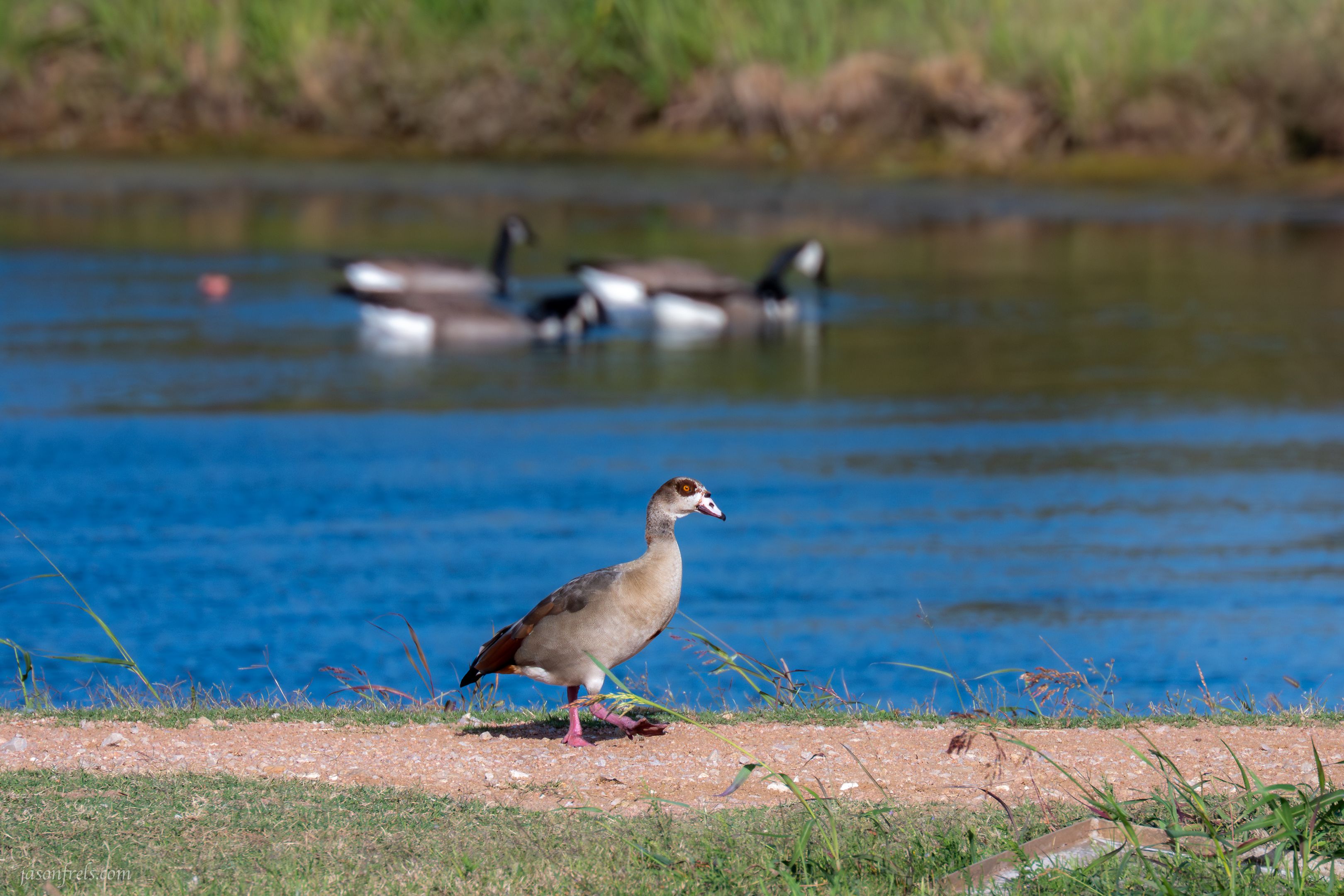
Not far from the ducks were some Egyptian Geese. Egyptian geese were imported to the United States from where you’d suspect. They have thrived here and are now common in the southern states. I have seen them many times with their characteristic bulls-eye. Egyptian Geese aren’t really geese. They are technically Shelducks, which is somewhere between a duck and a goose. They do, however, quack, disproving the old saying about if it walks like a duck and quacks like a duck…. Anyway, in the background of the Egyptian Goose photo you can see actual geese.
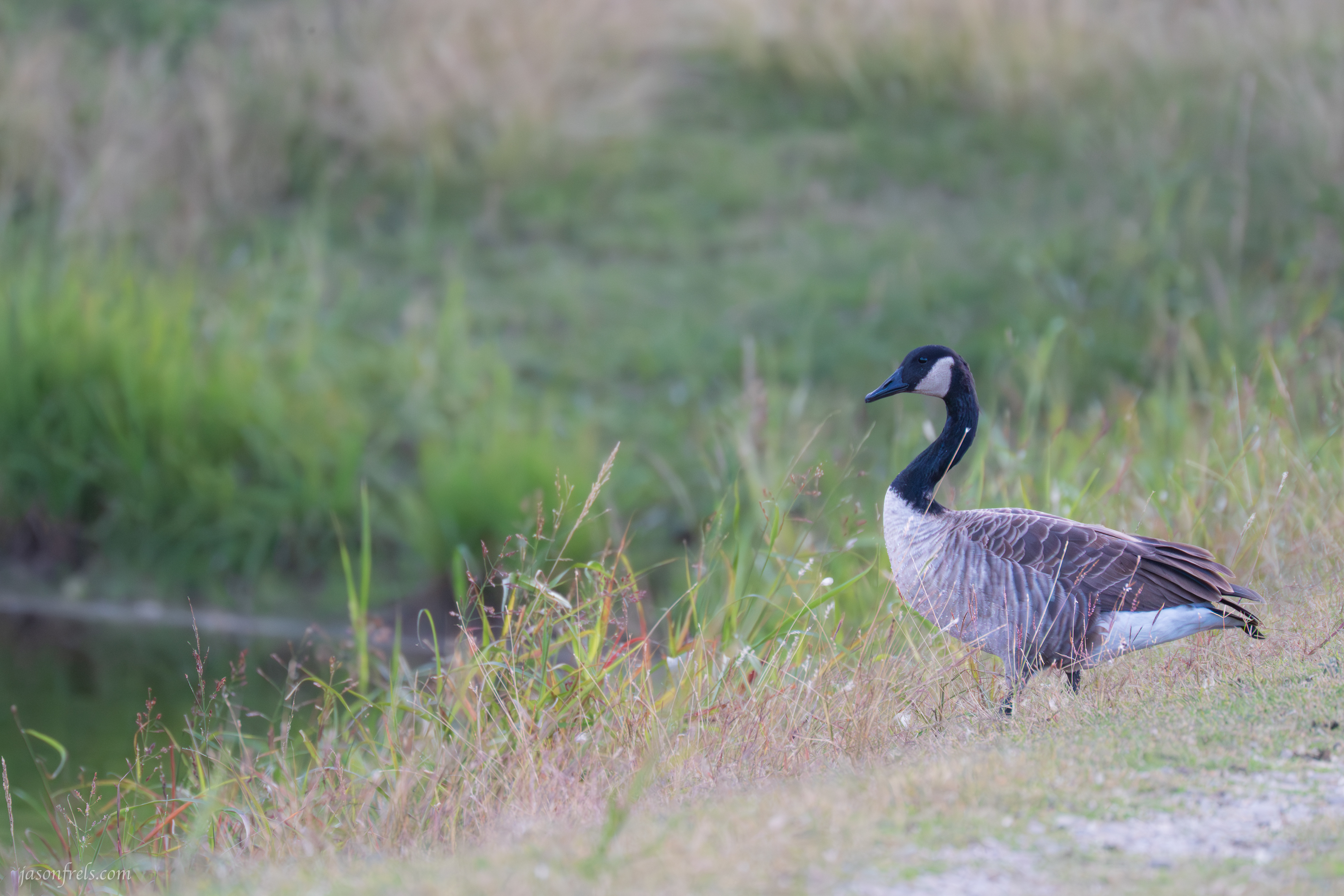
Canada Geese are very common around here around lakes and ponds. I don’t know if these have ever been to Canada but some of them do migrate to and from Canada with the seasons. These may be permanent residents that like to live around Inks Lake where there are plenty of campers that probably feed them as they usually seem to be very tolerant of large humans with cameras. I figured that I’d see dozens of these birds and I did.
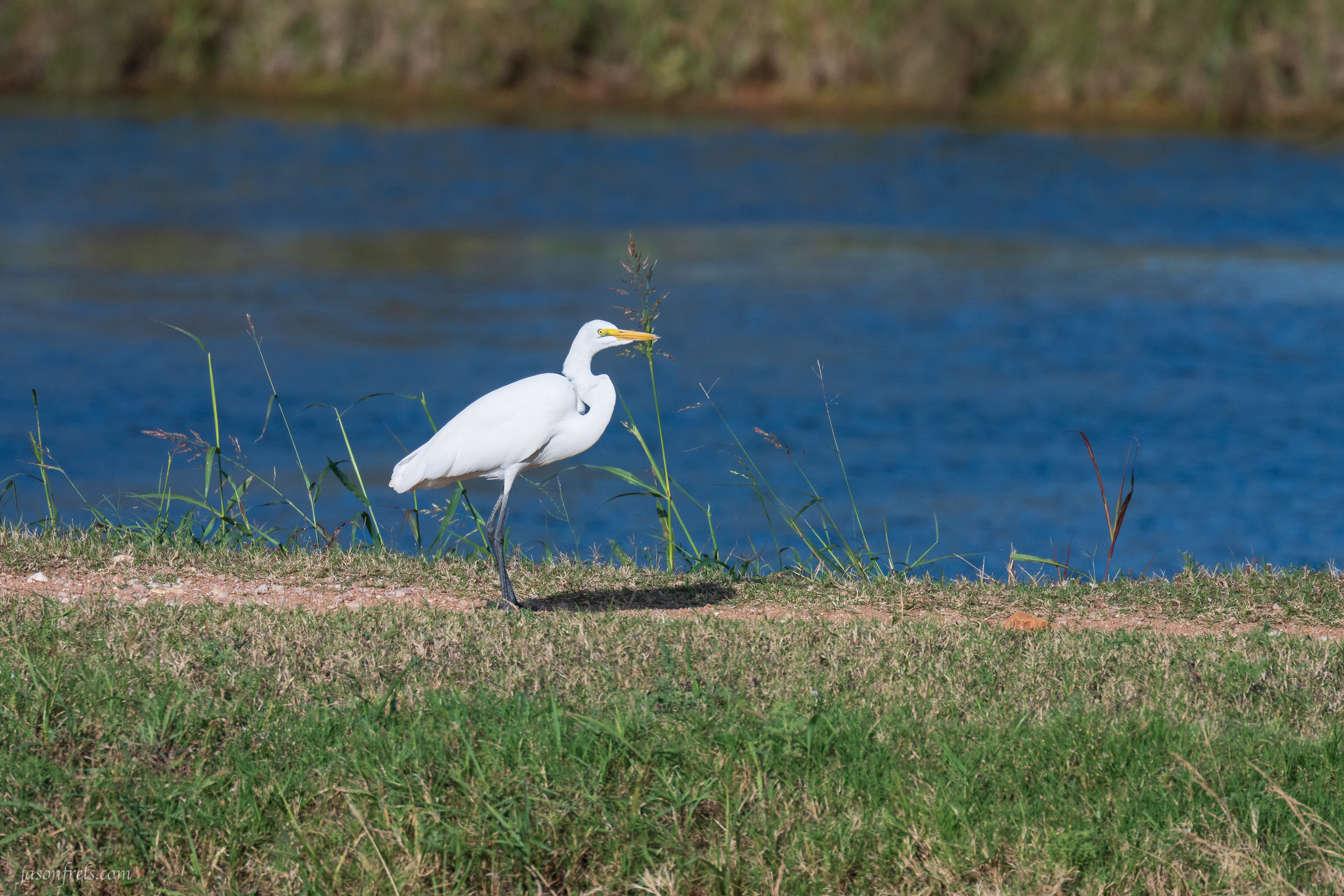
Another common bird here and almost anywhere else in the world is the Great Egret. They are quite easy to spot with their bright white plumage. I have to remember to adjust the exposure compensation down a stop when shooting these birds in bright sunlight or I get a blown-out white bird with a well exposed background. You could also use point metering or highlight weighted metering, but it is just quicker and easier for me to dial the exposure compensation down a stop. This guy was letting me slowly walk up to him and take pictures until a fish hatchery employee came up on his little cart to do some sort of actual work and spooked the bird.
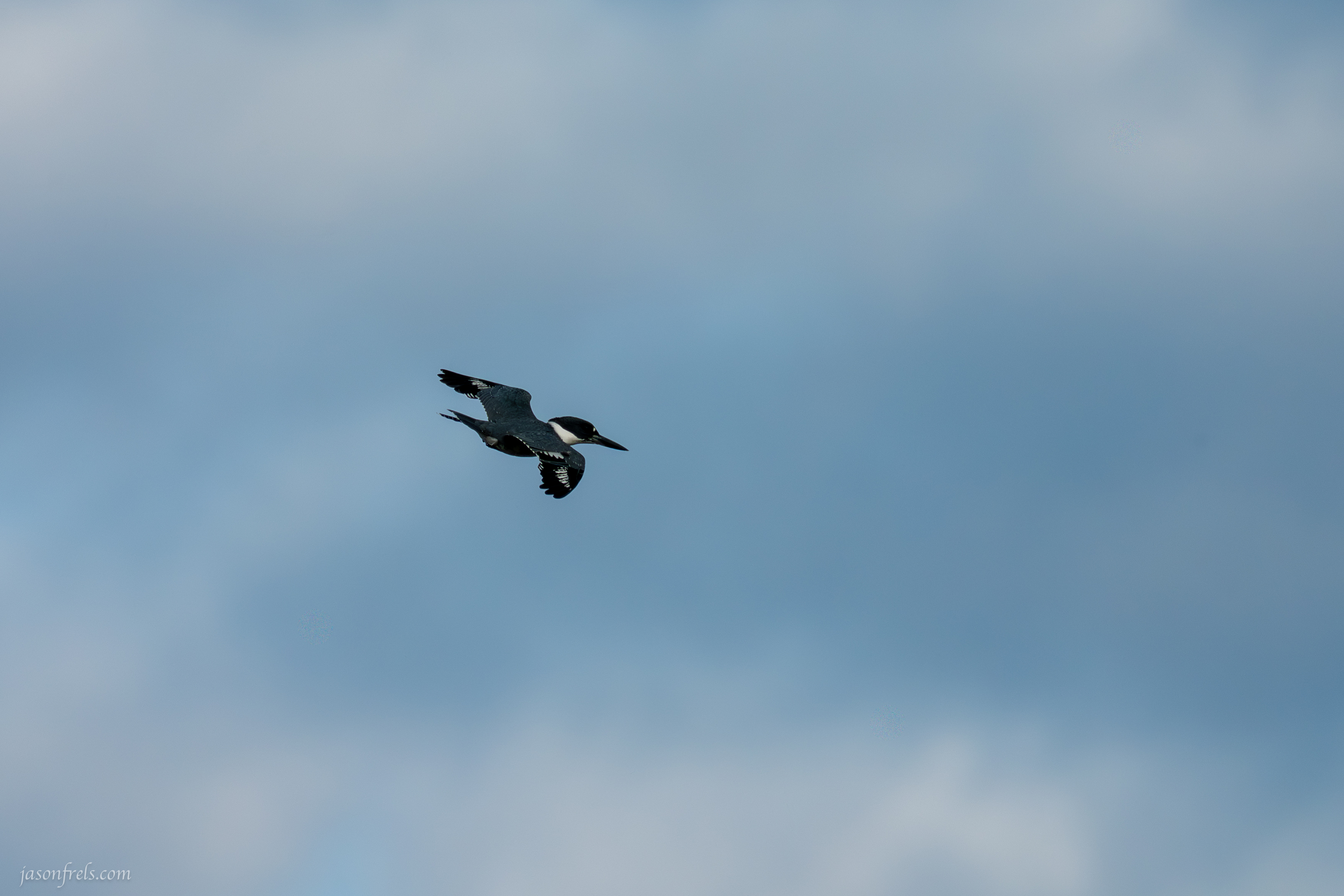
I don’t think I have ever captured a photo of a Belted Kingfisher before this day, but there was one flying around above the ponds fishing I suppose. They can hover over a spot for a few seconds and then go after their prey. It was easy to track and focus on it while it was hovering. I didn’t get a good look at its breast to see its belt, but you can see his long fishing beak and darker gray head. Belted Kingfishers are another bird that is common all over North America and can be found in Texas year-round.
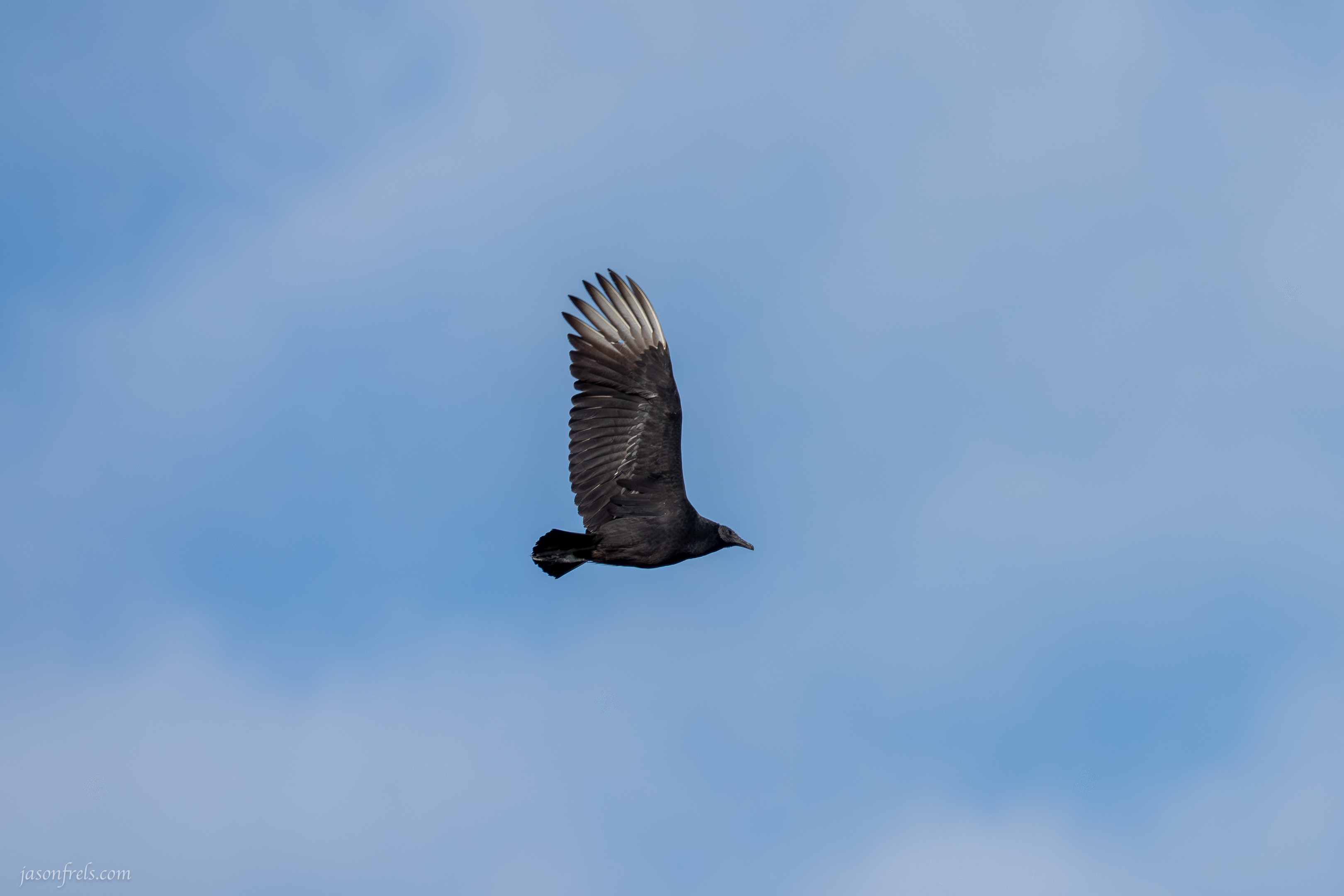
And lastly, the Black Vulture. I guess few people find beauty in these birds, but you can see them on any given day in these parts riding the winds and soaring across the sky. I guess people don’t love them so much because they usually accompany the death of some other animal. But they don’t kill animals, they show up and eat it after something else, often people, killed the animal. There was a large flock of these at the fish hatchery and I caught this one flying up into the sky to ride the winds.
So, that was my photo haul on a cool and windy Sunday morning. Not a bad way to start the day.
 Jason Frels
The bullseye duck looks a little freaky, but it is unique. I wish Egrets were common around here. Wow! I will agree that I never saw much beauty in vultures, but … your picture of one in flight, changes that. A wonderful shot!
LikeLiked by 3 people
Maybe if you aren’t too careful with your eye makeup, you might end up looking like the Egyptian goose.
LikeLiked by 2 people
Haha! That would be why I don’t wear any.
LikeLiked by 1 person
“Pair-a-ducks”? You may live to egret that pun.
Great photos. I like the kingfisher the best, just because it’s such a unique looking bird.
LikeLiked by 2 people
I thought I was a talonted punster.
I guess I hadn’t noticed the kingfisher before. I’ll be on the lookout for them in the future.
LikeLiked by 1 person
Usually you are talonted, but in this case I think you were winging it.
LikeLiked by 1 person
🤦♀️!
LikeLiked by 1 person
I overlooked the pun for the sake of my sanity, and I don’t regret it. 😛
LikeLiked by 2 people
Overlooking puns seems to be a heavy price to pay for one’s sanity.
LikeLiked by 2 people
Doesn’t seem like she is getting her money’s worth either.
LikeLiked by 2 people
Good observation. She needs to do a lot more than that to find any shred of sanity.
LikeLiked by 2 people
Pfffffft!
LikeLiked by 2 people
Oh, help!
LikeLiked by 1 person
I didn’t realise that there were Egyptian Geese in the US. I saw them recently in South Africa and never thought that they have been imported in the US; I guess the climate in the south is warm enough for them to thrive. Nice pics of the various birds. (Suzanne)
LikeLiked by 1 person
It was especially fun to see the Egyptian geese. I’d heard that they were around Austin and San Antonio, but I’ve only seen two in the Clear Lake area. The pair were visiting a palapa at a local marina, pulling palm fronds out of its roof. I assumed they might have been nest building somewhere, and were using the palapa as a sort of avian Home Depot.
LikeLiked by 1 person
My mother lives north of Houston in Montgomery and I have seen flocks of them at a pond near her house.
LikeLiked by 1 person
These snaps are stunning!
LikeLiked by 1 person
Great pictures. We have mallards and Canada Geese this side of the Atlantic as well but only little egrets which are actually very similar to great egrets just smaller ( well obviously I suppose ). No vultures though which is a shame as they’re amazingly graceful birds when they’re soaring. I saw some Griffon vultures many years ago in the Cévennes area in the South of France where they’d just been re-introduced. Apparently incidence of sheep diseases dropped after their re-introduction because the vultures scavenged any dead carcasses
LikeLiked by 2 people
Drivers in Texas do a pretty good job of feeding the vultures so they seem to thrive here
LikeLike