On my trip down to Aransas National Wildlife Refuge I took photos of so many different species of birds, I decided to break it into two blog posts to cover the highlights. In the previous post, I covered several birds that I saw at the refuge, but I also saw many around the town of Lamar and Goose Island State Park. There were birds everywhere and I stayed busy for a day and a half walking around shooting. So, here is part 2 of my adventure.
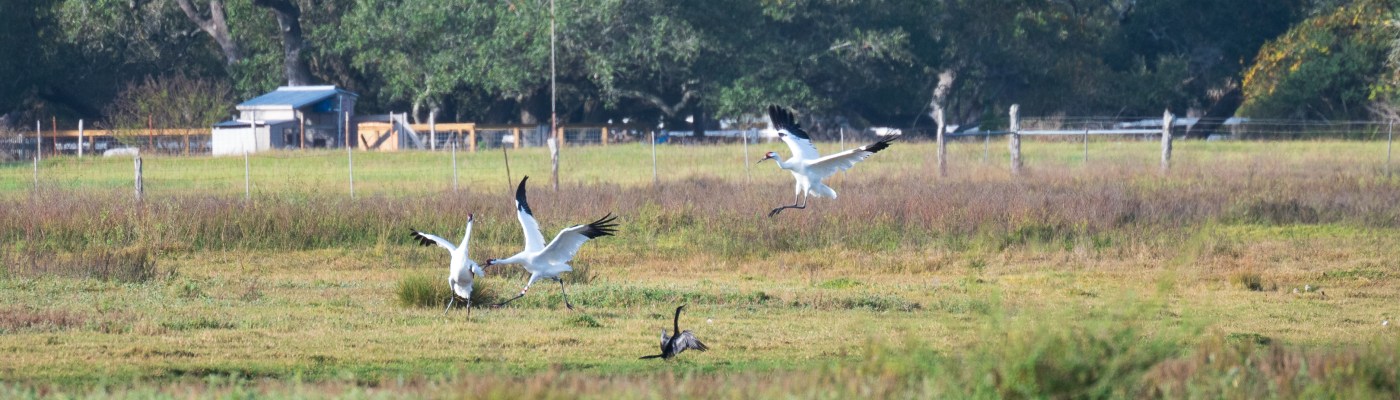
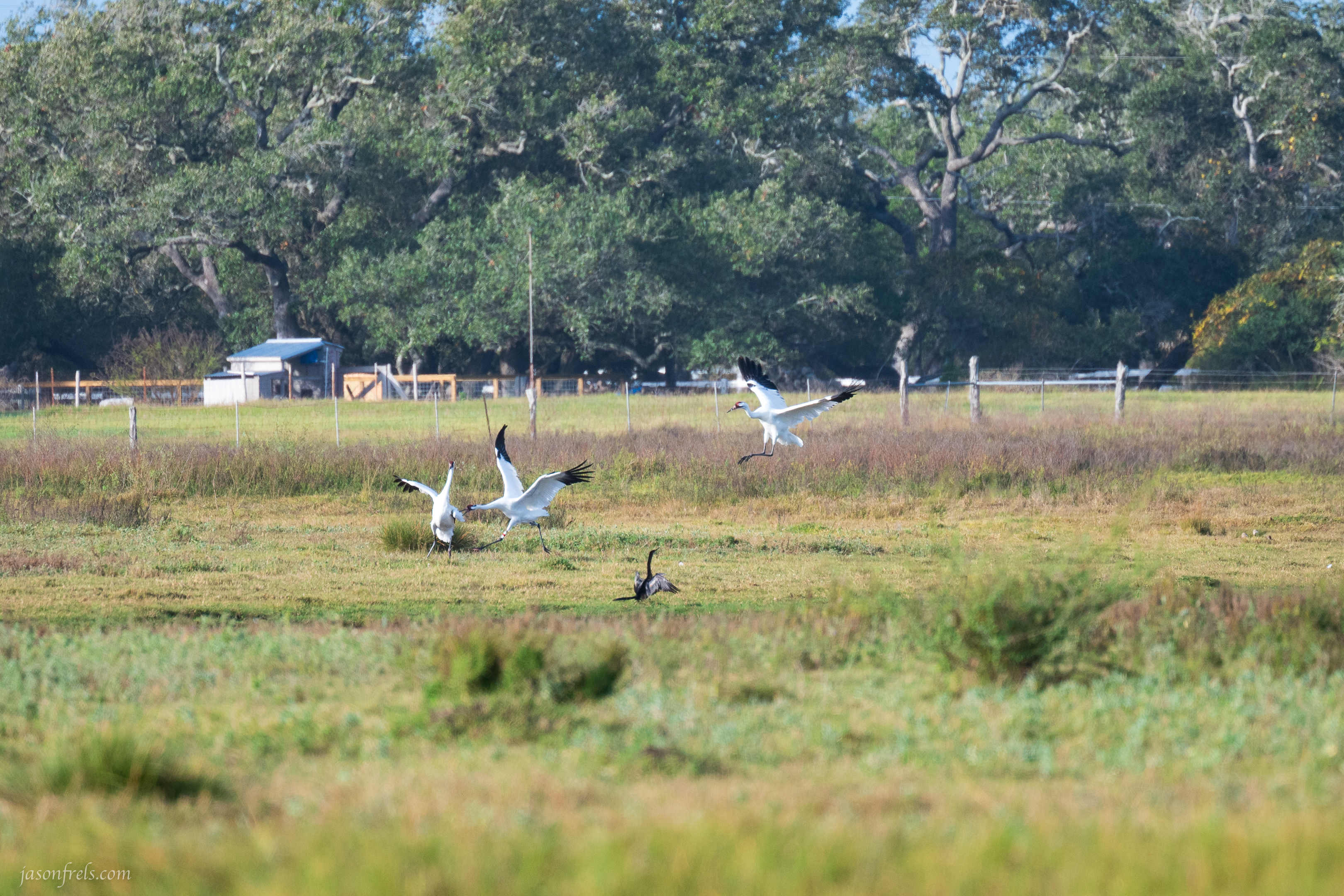
In addition to wintering on the wildlife refuge, the Whooping Cranes also hang around town in fields and pastures. Unfortunately for me, this was on private property so I was left to shoot them from the road through the window of my vehicle. But, I was happy to get to see these amazing birds even though I was unable to get any close portraits. Every year, they fly 4000 km across the continent twice and find the same place each time. Humans had to put a bunch of GPS satellites in orbit to be able to do this, but these birds can just somehow make this trip on their own.
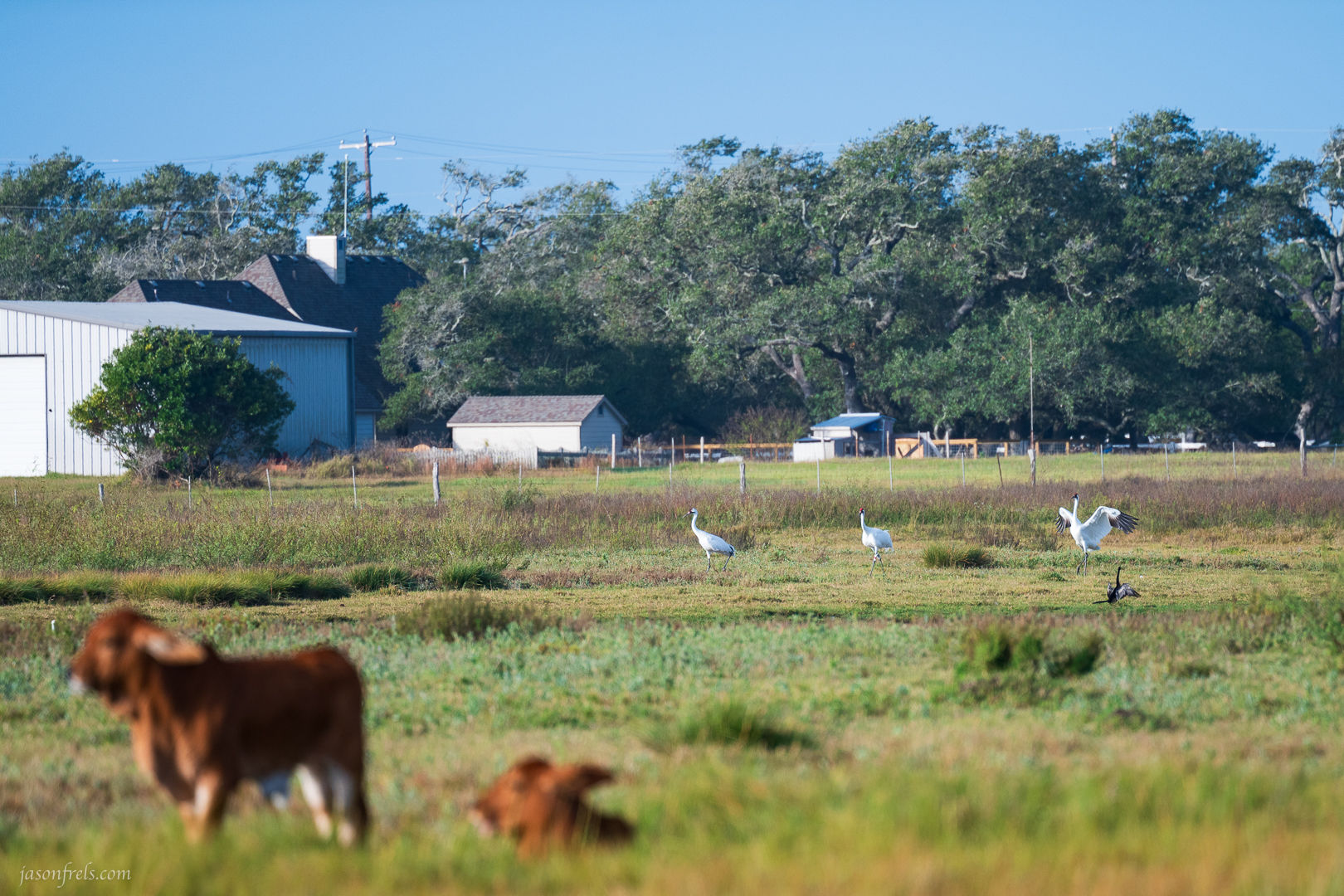
It was widely known where they wintered, but for years nobody quite knew where they went in the summer. But in the 1950s, some Canadian firefighters noticed them from a helicopter and reported back so that wildlife biologists could confirm that they nest up in a remote region of Wood Buffalo National Park in Alberta and Northwest Territories Canada. Fortunately there was already a national park there to protect the wood buffalo and it turned out it protected the breeding ground of the whoopers as well. Since then wildlife specialists in both countries have worked to understand and protect the birds and they seem to be making a strong recovery. Both the Aransas National Wildlife Refuge website and the Wood Buffalo National Park website have good information about these birds if you want to go read more.
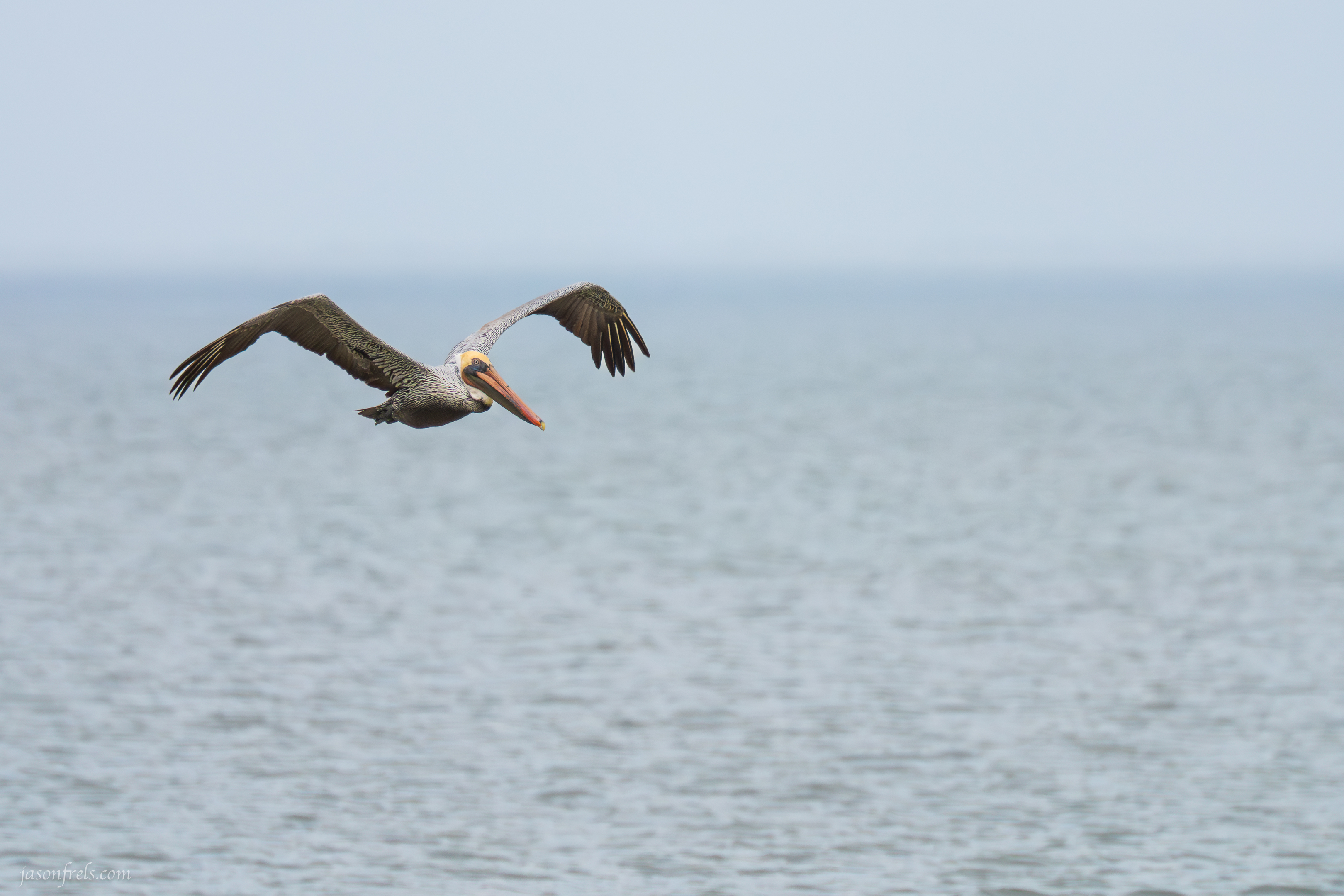
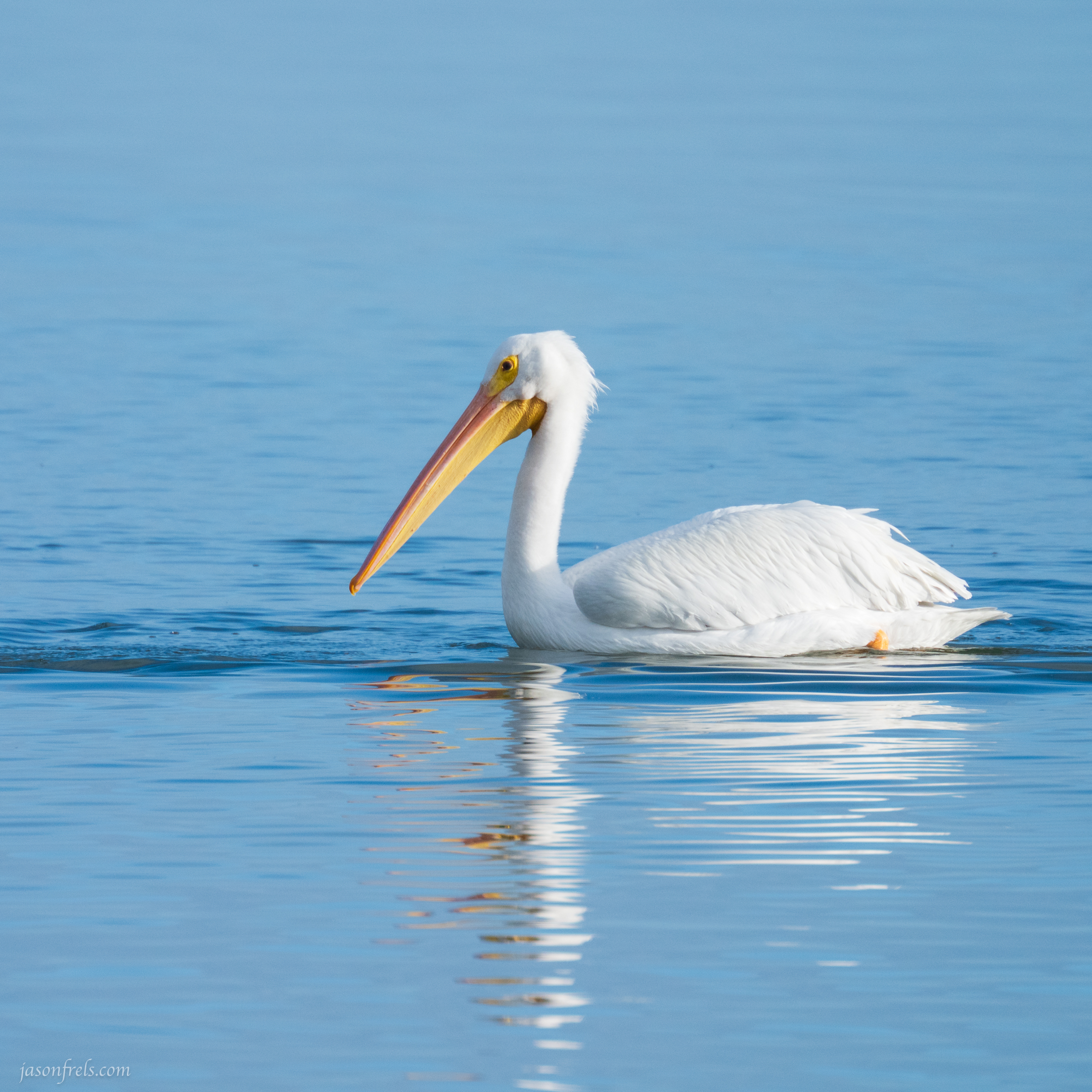
Another large graceful bird that is common around the Aransas NWR is the pelican. Actually, there are two kinds of pelicans common to North America. The Brown Pelican and the White Pelican. I generally see more of the brown pelicans but I see plenty of whites too. One of my favorite things about going to the beach is watching lines of pelicans flying down the beach or swooping low over the water. They may be a bit comic looking on land, but in the air or on the water they are quite graceful.
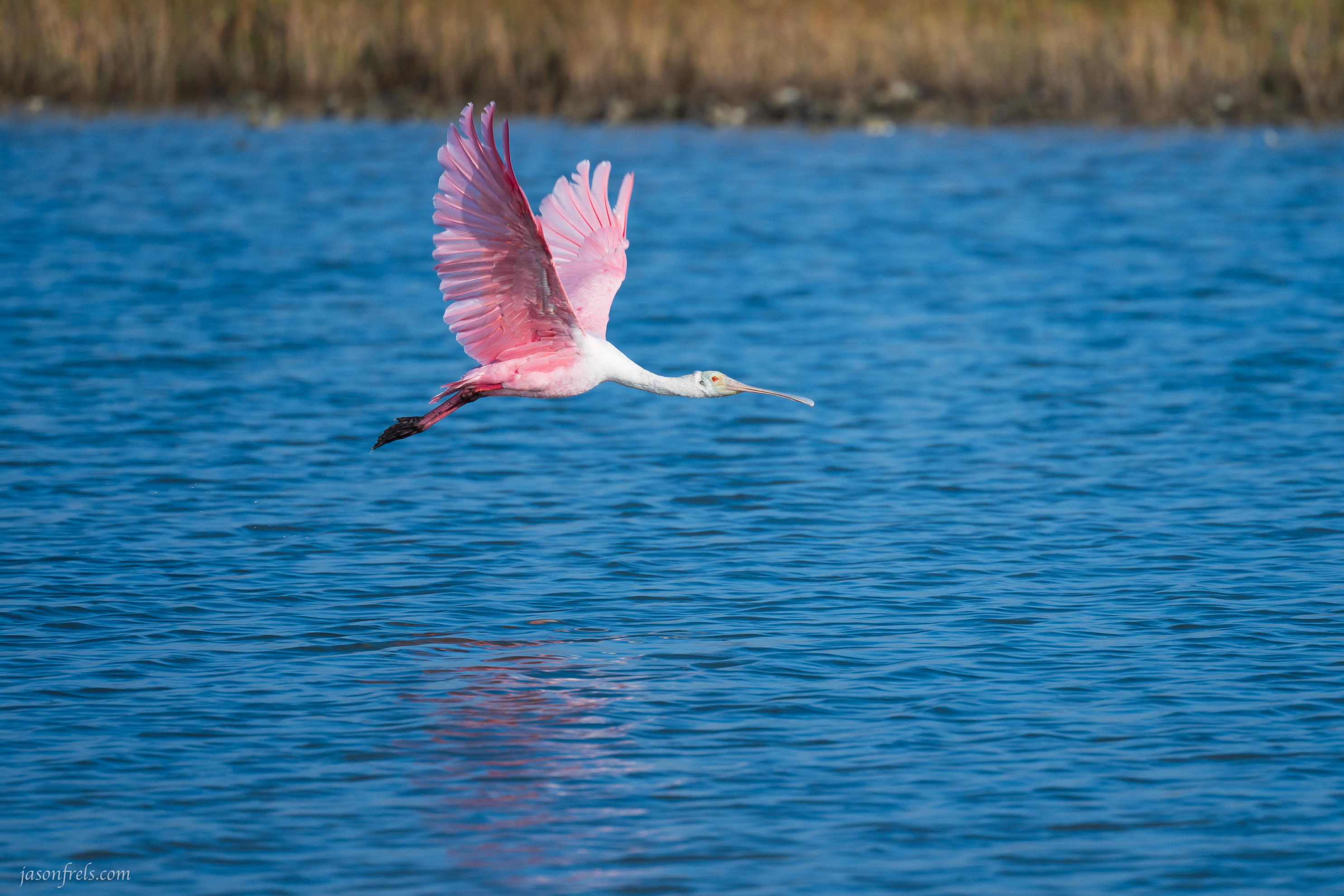
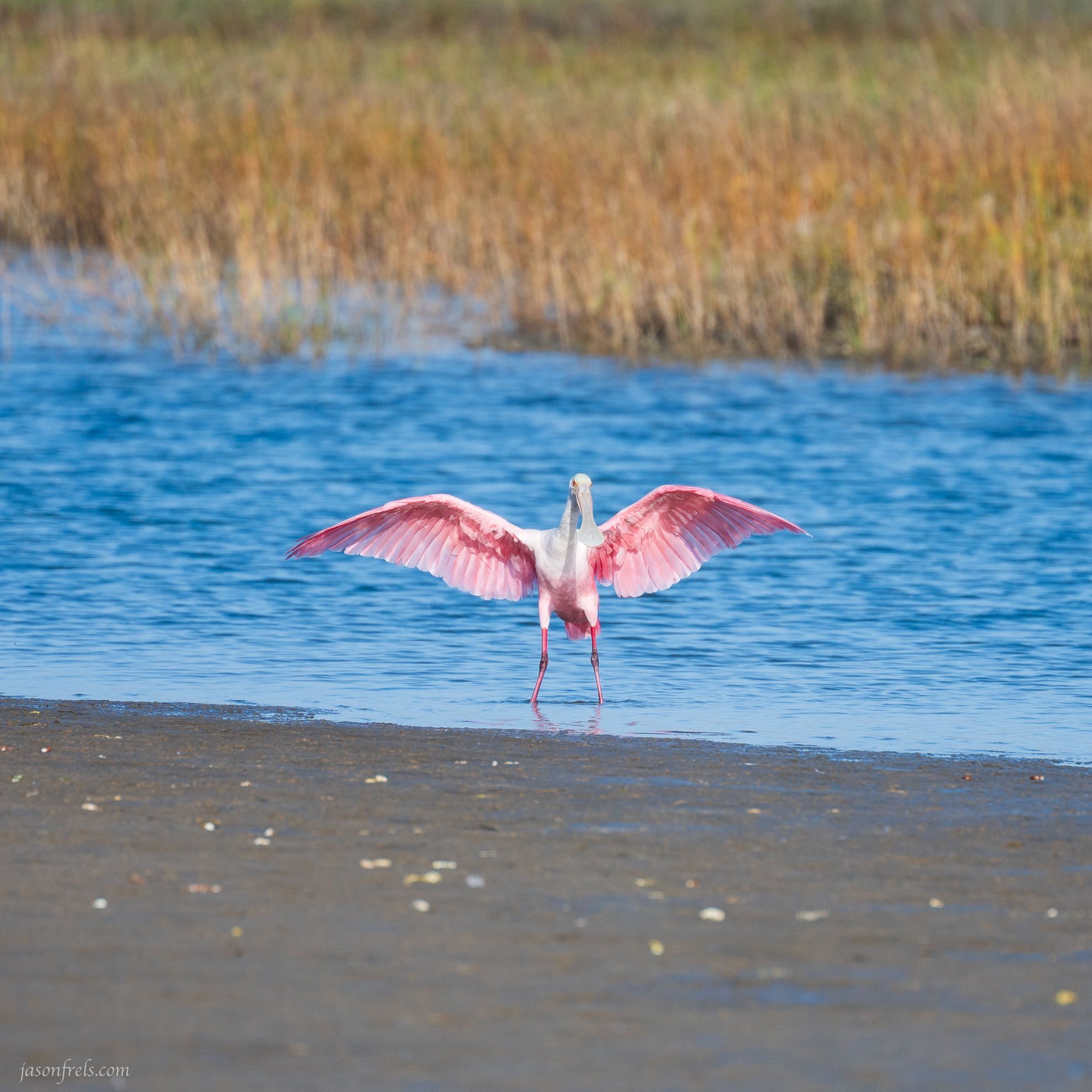
Another bird that is hard to miss is the bright pink Roseate Spoonbill. While the herons and egrets have the sharp beaks that they can use to stab their prey, these birds opted for the spoon-shape. While I saw many of these from a distance, I did find one at Goose Island State Park that was willing to pose for me and show me its wings. These birds are common across the US Gulf Coast and down into central and South America. They can use the spoon-shaped bill to forage in the shallow water snapping up insects, shrimp, and such. And they certainly are fun birds to look at.
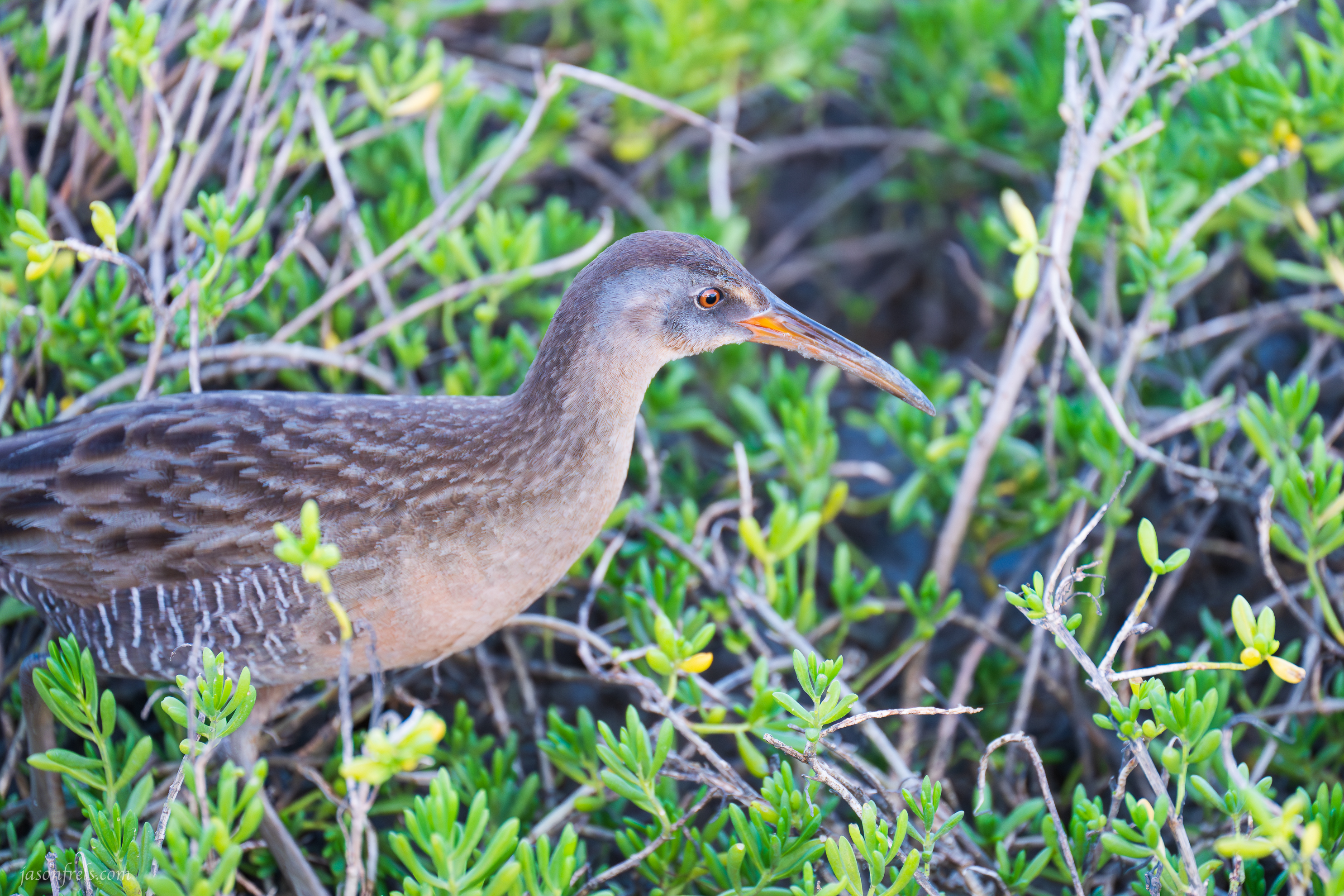
When I was hanging out on the boardwalk watching some egrets and herons, another little bird that I wasn’t familiar with came darting almost right up to my feet. I pointed the camera down really quickly and snapped a few close-ups; he was so close that I wasn’t able to get the entire bird in one shot. I spent some time searching and determined that this was probably a Virginia Rail, which is common across the United States, not just Virginia. They like to run through marsh areas looking for food, which is what this bird was doing, and this one didn’t seem all that shy of humans. I like its brown eyes and the striped feathers on his sides.
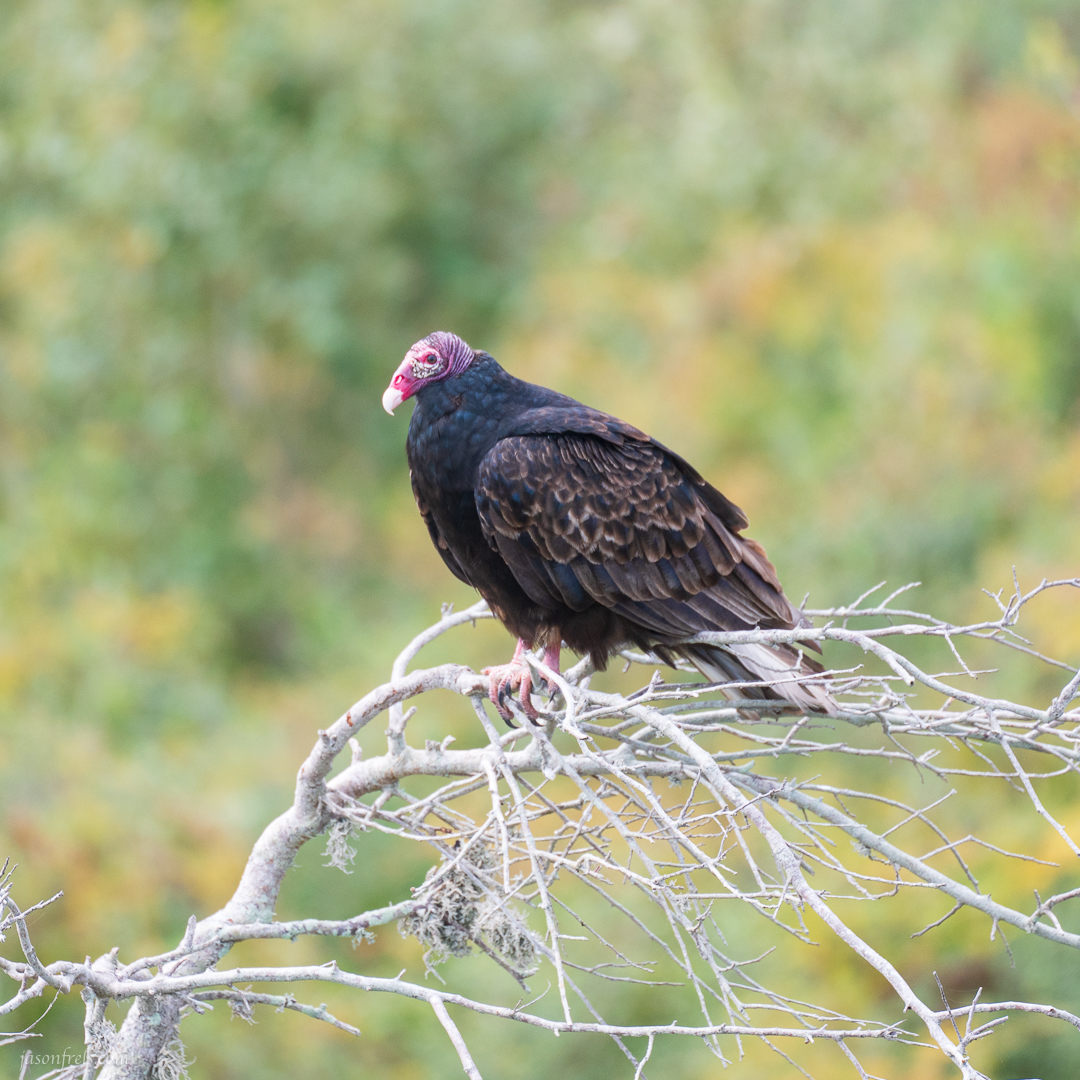
And I want to include a Turkey Vulture, one of the two types of vultures common to Texas. There were many roosting in trees around the observation tower at the wildlife refuge and I had no trouble getting portraits of them. I often see these large birds and their cousins, the black vultures, circling around on the wind currents over the hillside while I am hiking. They may not be all that pretty to look at but they do a good job cleaning up all the animals that we hit with our cars before they get too putrid and disgusting. So, I appreciate these birds but I think that they would prefer that I was dead.
Those were the highlights of my birding outing. I saw a lot of other birds, but these were the ones that I managed to get good photos of. And I also thought it was interesting learning a few facts about each species. I love and appreciate all the wildlife we have in the world and I enjoy seeing them thriving. Thanks for reading.
 Jason Frels
Thanks for helping to make my bird brain a little smarter. I like the photo of the Roseate spoonbill in flight the best. What a beautiful and graceful looking bird. But that was interesting info on the Whooping Crane. I’ll bet when those birds get sick, you can hear them cough a mile away.
LikeLiked by 2 people
It helps that they are the tallest bird in North America when standing. Easy to pick them out from a long way off, which is where I always was.
The spoon is my favorite eating implement, so I can appreciate the evolutionary wisdom of the spoonbill. I would like to see a whisk-billed bird though.
LikeLiked by 2 people
A whisk-billed bird would certainly be batter than a spoon-billed.
LikeLiked by 1 person
That pun takes the cake
LikeLiked by 2 people
I thought you might get a rise out of it.
LikeLiked by 1 person
I’ll let you know if that pans out.
LikeLiked by 1 person
I think it will, no matter how you slice it.
LikeLiked by 2 people
Nothing like a holiday Pundt cake to share.
LikeLiked by 2 people
If puns are all we get for Christmas, I guess it’s our just desserts.
LikeLiked by 2 people
LOL! 🤦♀️ But you don’t need to share!
LikeLiked by 1 person
😶✋️!
LikeLike
🤦♀️
LikeLiked by 1 person
Oh, help! You all really were on a roll this morning I see.
LikeLike
A good productive trip 👍👍
LikeLiked by 1 person
It was fun even with the mosquitoes harassing me. That area is like a shooting gallery this time of year and it makes it easy on someone like me.
LikeLiked by 1 person
I’ll eye roll before I comment in response to the former food implement comments. 😳😳😳😬
What a nice trip. Have only seen the roseate spoonbill in the Omaha zoo. Think it’s so much nicer to see wildlife in the wild. So you hVe the 100-400 lens? Maybe there’s an 800mm lens in there somewhere down the road to get even closer. And it’s nice that such. Rare bird as the whooping cranes migrate to an area “near” you.
LikeLiked by 2 people
There is an 800mm lens but it is very expensive. Not sure I’ll ever unload that much money on a lens, but I have done foolish things before.
LikeLiked by 1 person
Nothing foolish about pursuing a passion. In the past I have hesitated about buying some gear, but if it’s what one does or enjoys, I can eat oatmeal twice a day and cut some other costs.
LikeLiked by 1 person
Don’t try to talk me into it. I’m already just about there
LikeLiked by 1 person
Nudge, nudge. Can’t wait to hear the bragging about “bagging” those photos opposed to almost…..Merry Christmas. Secret Santa anyone?
LikeLiked by 1 person
What a great time you were able to have seeing all these birds and it made tor a beautiful Christmas gift for us all to see them too. How nice that Betsy was there to say “Merry Christmas” to you. Hope you told her Hi for me.
Love the white pelican and the spoonbills. Turkey vultures can be intimidating when seeing them fly. They have such a large wingspan! Wildlife is indeed wonderful.
LikeLiked by 1 person
I’m glad you enjoyed my bird photos. It’s nice in the winter when they are all here.
LikeLiked by 1 person
Thanks for sharing! When I see pelicans it always reminds me of the “Finding Nemo” movie.
LikeLiked by 1 person
That spoonbill is quite impressive. Nice capture.
LikeLiked by 1 person