
In some parts of the country December means winter. But as I write this in central Texas right now (December 27), it is about 80F outside and kind of hot. So, there is no chance of snow and most of the vegetation has either gone dormant for the ‘winter’ or doesn’t care and is still green. But, the long native grasses have turned shades of gold and brown before going mostly gray in January and February. So I suppose that is the color of December around here is gold.
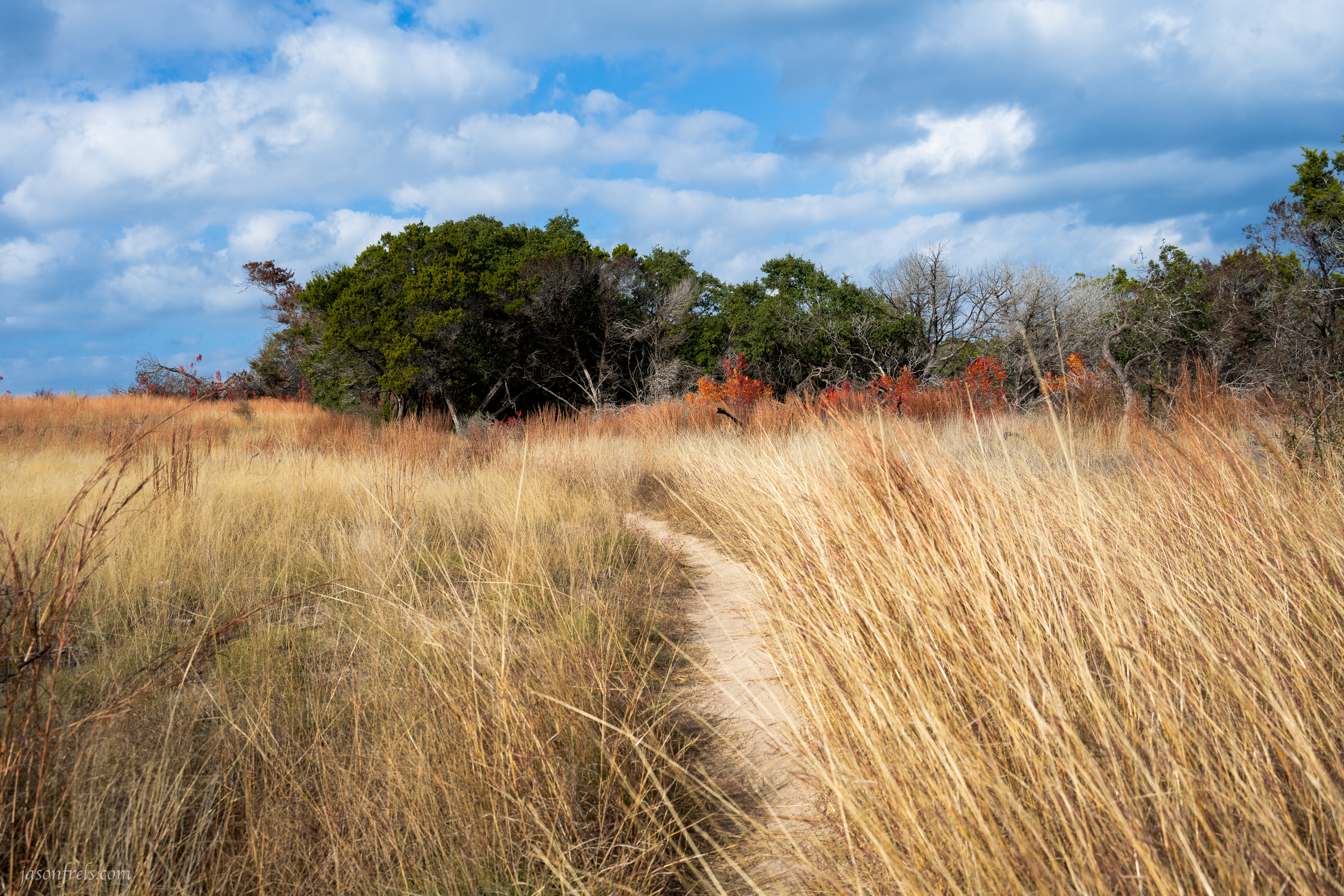
A great place to see the long grass is along the hiking trails at the Balcones Canyonlands National Wildlife Refuge. The birds that own this place are vacationing down in Central America, but the place is still nice for a hike during the depths of winter. So, I put on some shorts and a tee-shirt and went for a hike.
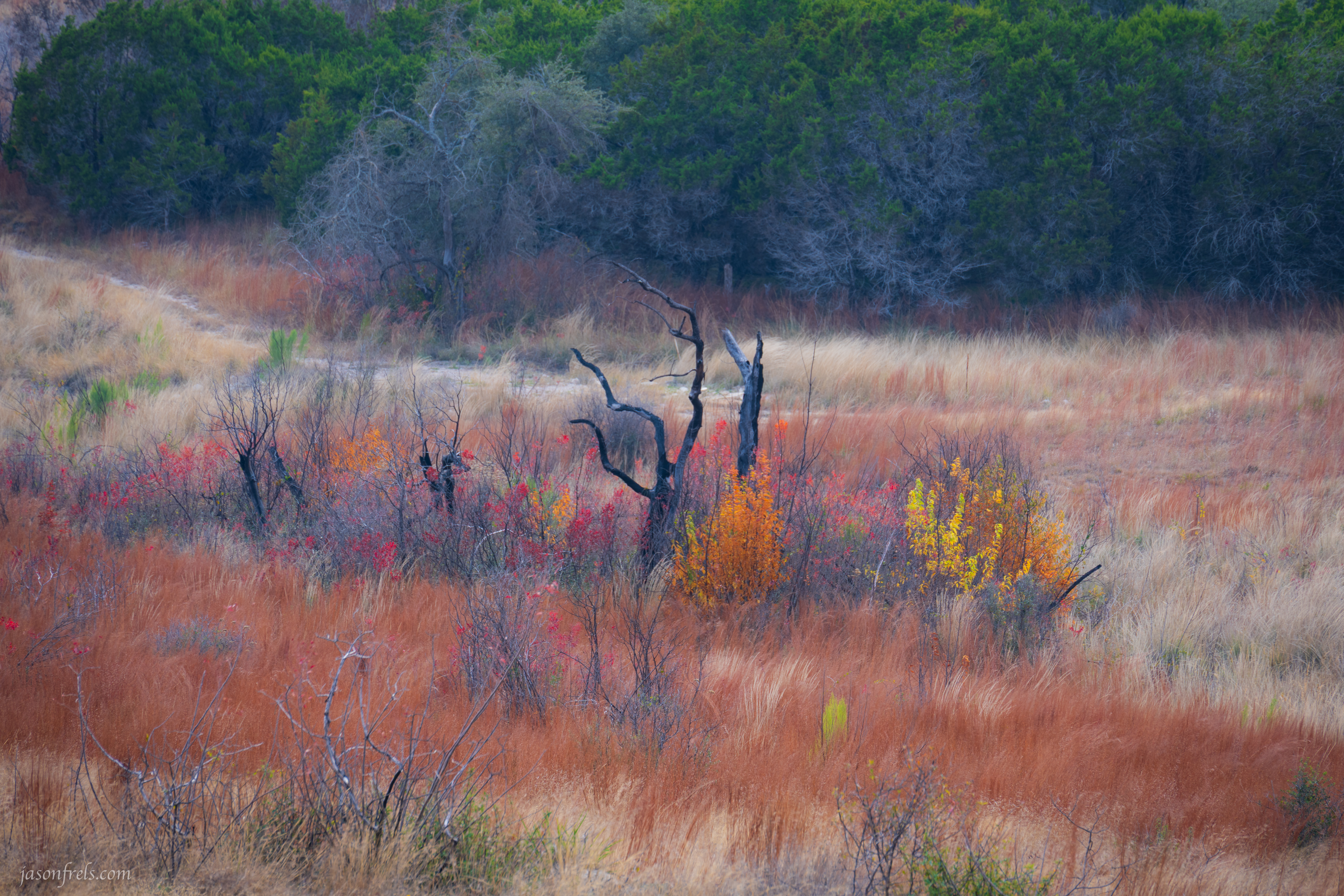
Below are some colorful leaves among the charred remains of some trees. I thought this made for a nice autumn color photographic vignette. The refuge is burned periodically to maintain the open grasslands that are important for the habitat of the Black-Capped Vireo. If they didn’t perform burns regularly, I suspect that the Ashe Juniper would take over in a decade or so.
In the late afternoon sun, the long grasses become a wavy sea of gold across the hillside. I enjoy hiking the Indian Grass trail in the refuge this time of year to enjoy the golden grass. I’m not sure if I am ever very good at capturing it photographically, but it’s fun to try. The photo below has a maintenance road that runs through the park disappearing toward the distant hillside.
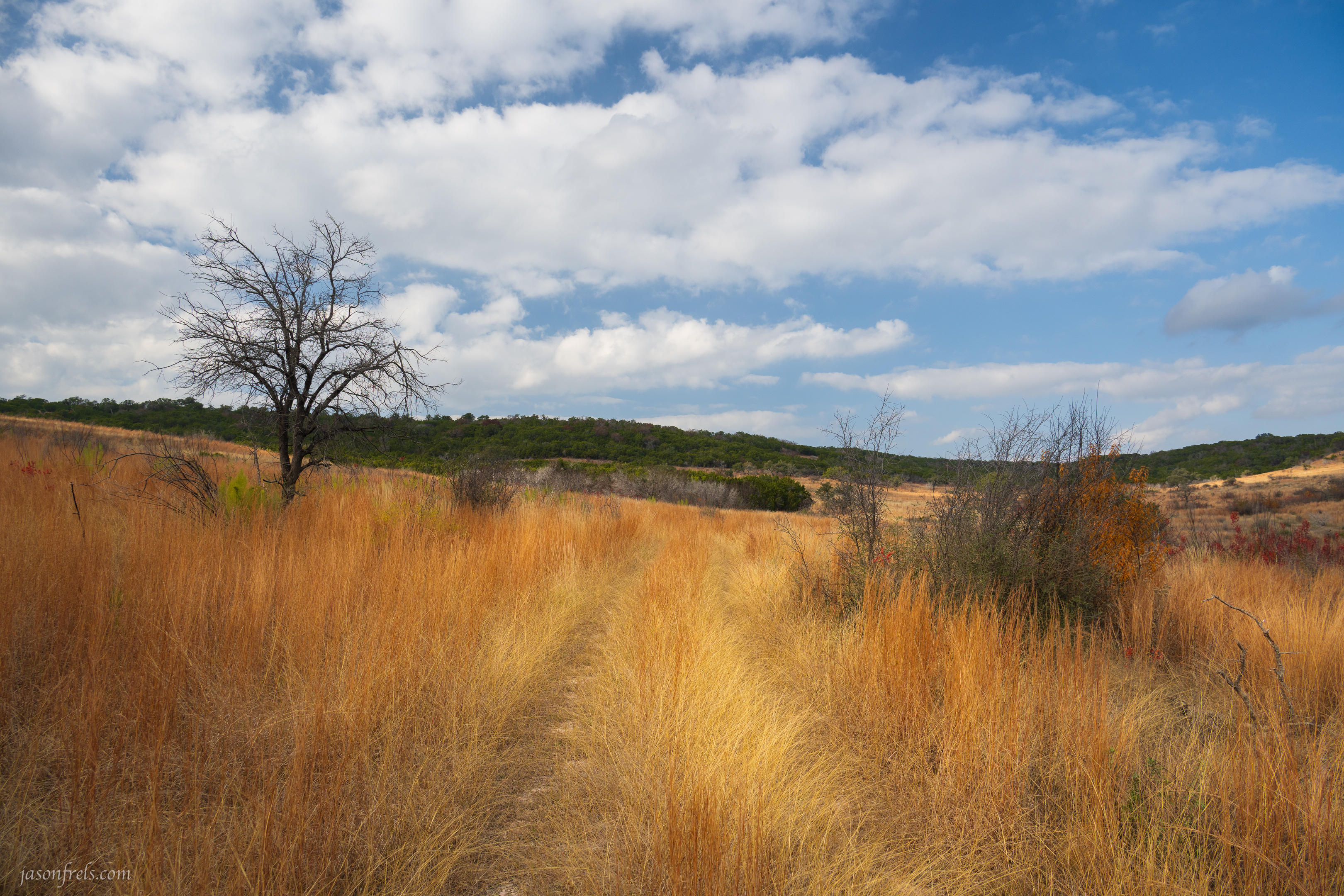
All of these photos were shot using a polarizer that can enhance the color a bit under certain conditions. In the image below, you can see that the sky on the right side of the photo is a little darker. This can happen when you shoot with the sun at a certain angle as I did here. I tried to correct it in Lightroom, but it isn’t perfect.
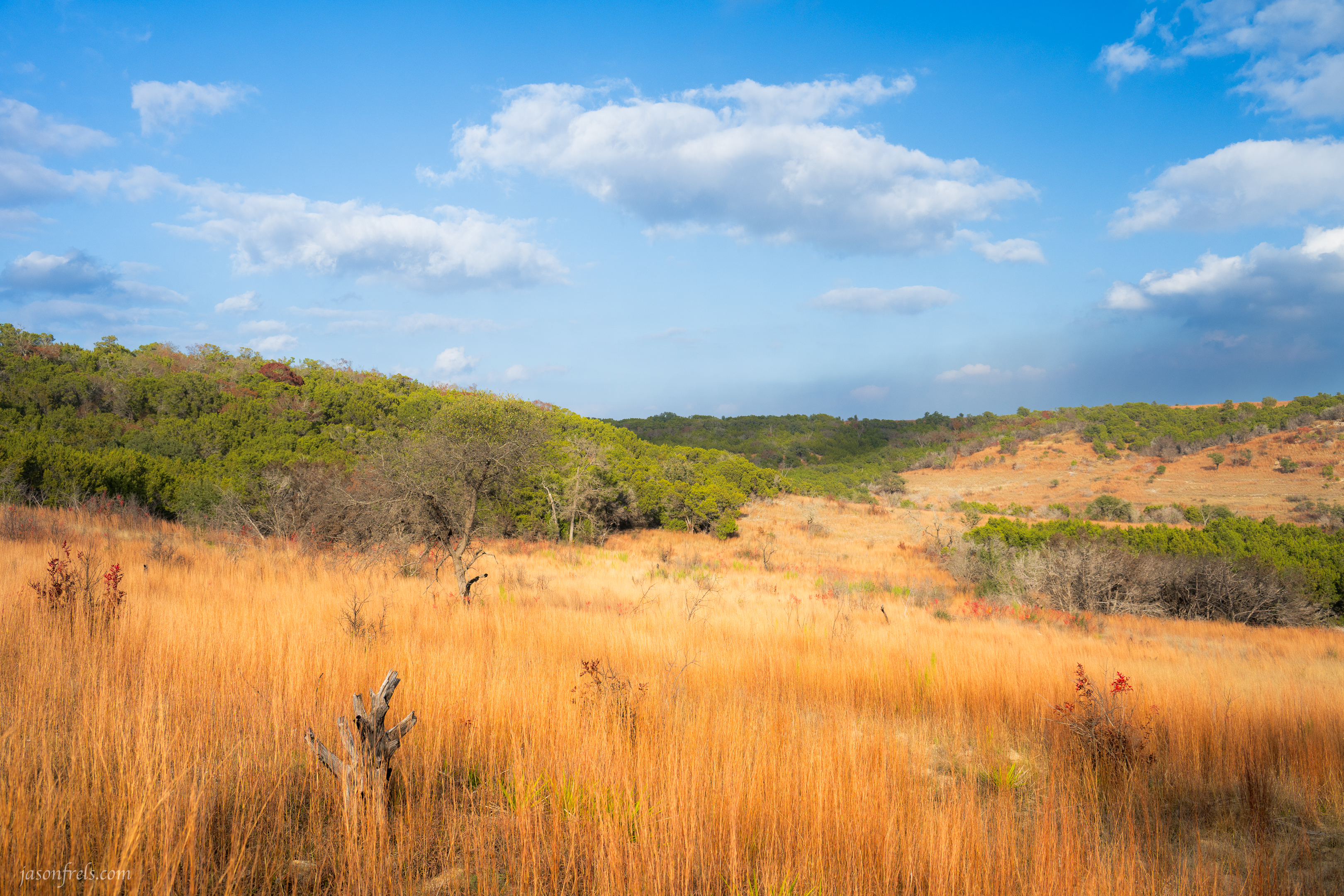
Hopefully by late spring, the Black Capped Vireos will be darting around the low shrubs and grass catching bugs. I’ve never actually seen one, but they are quite small and like to hid in the scrub.
Over the years of hiking here, I have come to associate December with the golden grass out in the hills here, so that is my color of December. Thanks for reading.
 Jason Frels
80 degrees! How …. pleasant.
The color of gold is always a pretty color. I think it glows the best in the last photo. The colors of “fall” are pretty, too.
Your mention of the black capped vireo made me think of our black capped chickadees. I looked the vireo up. They are both cute birds.
LikeLiked by 1 person
Here in the Lowcountry we are ‘golden’ for the early winter too. It’s so much better than cold winters of the north.
LikeLiked by 1 person
The golden grass has its own beauty. I’m not sure if it rivals that of aspen or maple trees, but it still has a photogenic quality to it.
I kind of like the effect of one side of the sky being darker than the other.
The black capped vireos probably hang out with the armadillos.
LikeLiked by 4 people
Thanks, I have to try to find whatever beauty I can around here this time of year.
I think the vireos are probably sipping tequila and listening to some fine mariachi music about now.
LikeLiked by 4 people
That would explain what the black capped vireos are hard to find!
LikeLiked by 2 people
Exactly. They probably play lookout for the armadillos, and tell them when to hide.
LikeLiked by 3 people
Now, the mystery is solved!
LikeLiked by 2 people
🤩🙌🏼✨🤩
LikeLiked by 1 person
Nice colors, Jason. And the season of Brown, a by-product of winter. But it’s always good to get outside and go for a hike. You set a good example and I need to do more of that, rather than using my car for a “blind” when looking for some birds in various areas. Am getting spoiled. Are you doing any First Day hikes? Another storm is rolling through this area and trails at some of the local parks have inclines and declines and I’ve fallen on my asks more than once.
LikeLiked by 1 person
I’ve gone to Illinois to visit family and I think I just landed in your storms.
LikeLike
The colors in the second photo are beautiful – not what I would have expected.
LikeLiked by 1 person
I think you did well.
LikeLiked by 1 person